
Why planning ahead may be one of the most loving things you can do.
Most parents spend their lives taking care of their children.
You help them when they fall off their bike. You guide them through school. You support them through relationships, careers, marriages and all the unexpected turns life brings.
So why should that care stop when you die?
That question sits at the heart of this episode of The Good Grief Podcast.
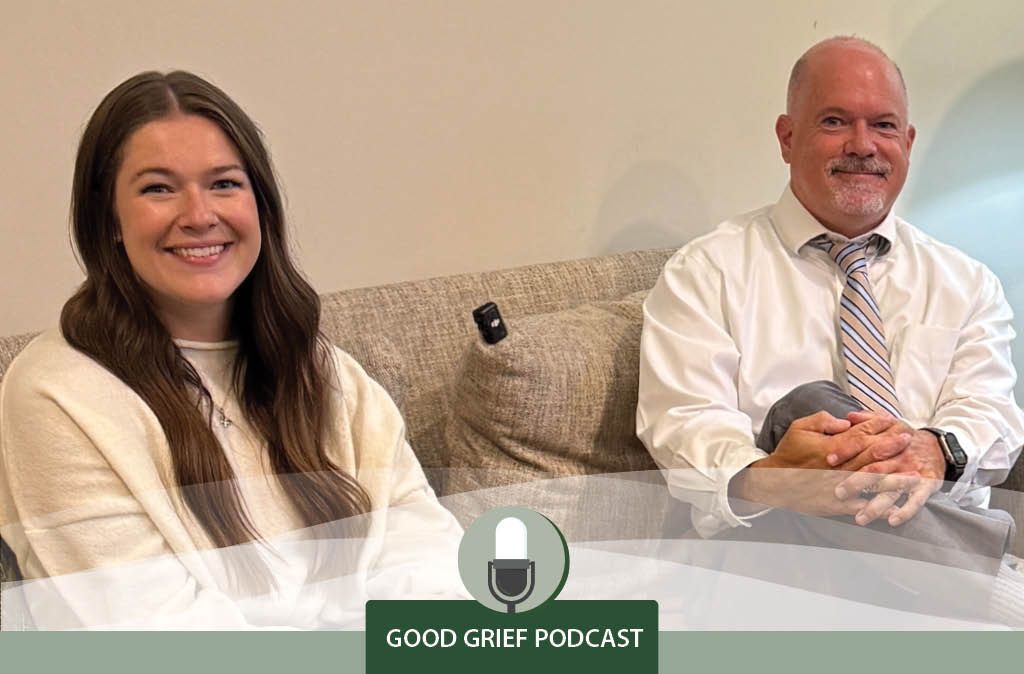
Mike and Emma O’Connell explore funeral pre-planning from a perspective families don’t always consider. It isn’t simply about deciding between burial and cremation or choosing songs and flowers. It’s about giving the people you love some direction during a time when making even simple decisions can feel overwhelming.
Your Funeral Isn’t Only About You
One of the most common things funeral directors hear is some version of, “I don’t need anything. Just cremate me.”
Emma explains that this is often where the conversation needs to begin rather than end.
What does “simple” actually mean?
Would you want your family to gather? Would they want an opportunity to say goodbye? Would there be prayers, lunch, burial or a memorial service?
Those questions aren’t about convincing someone to have an elaborate funeral. They’re about recognizing that funerals are also for the people who remain.
Pre-planning allows you to express what matters to you while still leaving room for your family to participate.
Grief and Money Can Be a Difficult Combination
Even close families can struggle when financial decisions enter the picture.
When funeral expenses haven’t been addressed, siblings may suddenly have to decide who will pay, how much should be spent and which services are important.
Those conversations are happening at the same time they’re grieving.
Emma explains that setting money aside beforehand can remove one major source of disagreement. Instead of arguing about whether they can afford flowers, memorial folders or a slideshow, family members can focus on personal decisions that help them remember the person they loved.
Pre-Planning Can Tell Your Story
A pre-planning appointment isn’t simply a checklist.
Emma describes spending time learning about people’s lives, favorite music, traditions, faith, family history, food and experiences.
Sometimes those conversations uncover details a person never would have thought to include in an obituary or funeral.
A favorite family recipe might become part of the funeral lunch. A meaningful song might replace the traditional music someone assumed they were supposed to choose.
Those details turn a funeral into a reflection of a life.
You Don’t Have to Plan Everything Today
Another misconception is that pre-planning means walking into a funeral home and making every decision in one sitting.
It doesn’t.
Emma explains that the process can happen over multiple conversations. Families can also begin with a planning guide and work through decisions gradually.
Even attending an educational seminar doesn’t commit you to anything.
You can simply listen, ask questions and understand your options.
Planning Ahead Creates Clarity
Families make an extraordinary number of decisions immediately following a death.
Pre-planning moves many of those decisions to a time when emotions aren’t controlling the conversation.
You can think clearly.
You can ask questions.
You can consider your finances.
You can talk with your children.
And you can make thoughtful decisions instead of rushed ones.
Pre-planning doesn’t eliminate grief. It gives the people you love more room to experience it without also having to figure out everything you would have wanted.
Maybe that’s the better way to think about pre-planning.
You’re not planning your death.
You’re helping take care of your family when they will need it most.
KEY TAKEAWAYS
- Pre-planning can reduce the number of difficult decisions your family faces after your death.
- Talking about your wishes can help prevent disagreements among family members.
- “Simple cremation” can mean very different things to different people.
- Planning ahead can address funeral expenses before they become a source of stress.
- A meaningful funeral should reflect the person’s life, personality, traditions and relationships.
- You don’t need to make every decision in one appointment.
- Family members can still be given meaningful choices even when most arrangements are made ahead of time.
- Pre-planning seminars can be used simply to gather information without making a commitment.
- Planning ahead allows decisions to be made with greater emotional and financial clarity.
MEMORABLE QUOTES
Mike O’Connell
“Your funeral is not about getting rid of your body as much as it’s about teaching them that we’re gonna live, we’re gonna love, but we’re gonna lose.”
“You’re not done teaching.”
“It’s not a question of if, it’s a question of when.”
“When you have strong convictions about what’s important, they’ll follow your lead.”
Emma O’Connell
“When they just say, ‘Thank you, you’ve taken such a burden from us. Our kids don’t have to worry,’ that’s when I softly smile.”
“You have to convince people that they matter, and their legacy matters.”
“When it comes to money and grief, they are a wildfire that can get bad fast.”
“If the money’s set aside, there’s no arguments to be had.”
“We’re setting it aside for something that is inevitable. We’re just planning for it beforehand, and that’s not a bad thing.”
“Decisions made with emotional clarity.”
RESOURCES
O’Connell Family Funeral Homes
https://oconnellfuneralhomes.com/
Pre-Planning Information
https://oconnellfuneralhomes.com/pre-planning/
Upcoming 2026 Pre-Planning Seminars:
River Falls, WI: Wednesday, September 9 at 10am or 3pm
Ellsworth, WI: Wednesday, September 9 at 6pm, or Thursday, September 10 at 10am
Prescott, WI: Thursday, September 10 at 6pm
Spring Valley, WI: Thursday, September 10 at 3pm
Hudson, WI: Wednesday, September 30 at 10am, 3pm, or 6pm
Baldwin, WI: Thursday, October 1 at 10am or 2pm
Seating is limited and these fill up fast, so please RSVP by calling.
Read Full Transcript
Transcript Disclaimer:
Our episodes of the Good Grief Podcast include a transcript of the episode’s audio for people who are deaf or hard of hearing, if you’d like to scan the material, or have low bandwidth. The text is the output of AI-based transcribing from an audio recording. Although the transcription is largely accurate, in some cases it is incomplete or inaccurate due to inaudible passages or transcription errors and should not be treated as an authoritative record.
[00:00:00] Welcome to the Good Grief podcast, brought to you by O'Connell Family Funeral Homes. I'm your host, Pete Wagner. We're here to talk about life, loss, and what it means to grieve honestly. Each episodes offers real conversations, expert insights, and compassionate stories to help you navigate one of life's hardest seasons.
[00:00:19] Because grief isn't a problem to solve, it's a journey we take together. Let's get started.
[00:00:26] Pete Waggoner, Host: Welcome, everybody, to another Good Grief podcast. Today, it's pre-planning, and we have our resident expert in the house here. Hello, everybody. Uh, Emma, good, Emma O’Connell, good to see you.
[00:00:36] Pete Waggoner, Host: Michael, good to see you as always.
[00:00:38] Mike O'Connell: And I'm the resident expert dad.
[00:00:40] Pete Waggoner, Host: Absolutely. Well, you do understand if we're parents that we aren't the experts. We know our roles.
[00:00:45] Pete Waggoner, Host: Right?
[00:00:46] Mike O'Connell: Yep.
[00:00:46] Pete Waggoner, Host: I will say for Emma, the one thing I've gained from you through a lot of this is, this is an area of the business that you've really latched onto quite impressively taking the lead here from your father.
[00:00:58] Pete Waggoner, Host: What for you have [00:01:00] been the most rewarding parts of your journey in this part of the business?
[00:01:03] Emma O'Connell: Yeah. And I know we're gonna probably throw a couple jokes out there, but I do have to give a lot of respect and thank you to my dad for helping teach me how to work with families and how to ask the hard questions.
[00:01:16] Emma O'Connell: Just the journey of getting to be more comfortable in this position, and I'm currently still learning things, from him every day. So it's really wonderful to have a great mentor. And that would be one of my things I would say would be one of the most rewarding. I feel that, after a long appointment where we went over all the options, we've asked all the questions, when they just say, "Thank you, you've taken such a burden from us.
[00:01:43] Emma O'Connell: We feel that we've accomplished this, and our kids don't have to worry," that's when I sit down after my appointment and I just softly smile because I was able to navigate people through this, and help them become educated.
[00:01:57] Pete Waggoner, Host: Making a difference.
[00:01:59] Emma O'Connell: Sure, yeah. I [00:02:00] guess.
[00:02:00] Mike O'Connell: Yeah. I think of some words.
[00:02:02] Mike O'Connell: I think of compassion, empathy, professionalism, dedicated just fantastic. But I think you made it clear this podcast isn't about me. So I think we should- Oh. We, we should really get back to the Maybe
[00:02:18] Mike O'Connell: all joking aside, I am more than impressed with how you connect with families. I wish Grandpa was here to see that. But those words I said are you. The tender-hearted, the word is connection, and so super proud of you, and in a lot of ways, you do it better than I did- Oh ... and Grandpa in your, in your way, so.
[00:02:41] Emma O'Connell: Thank you.
[00:02:41] Mike O'Connell: Yeah.
[00:02:42] Pete Waggoner, Host: You know what? I think I've never had a, a session for that with you- Mm-hmm ... but I, I think what I would gather from what I know of you is, you know, you use the word empathy, and you have a really good ability of tact, I think, and listening to people, taking their [00:03:00] opinions, maybe if you don't agree with them and however it is.
[00:03:03] Pete Waggoner, Host: It's never in a, a standoffish approach, and it's always done with grace and dignity. Thank you. And you do a really good job, I think of, uh, of leaving people at ease and really being able to talk about things that they don't want to, because it's not easy. As a person, effortlessly are able to step in and listen, advise, and I think educate, which is the most important part- Mm-hmm
[00:03:27] Pete Waggoner, Host: without being condescending and arrogant and, you know, all like, "Well, you should do this." You don't have that bone in your body. Would you agree?
[00:03:33] Mike O'Connell: Yeah. You, you mentioned it's not easy. What wasn't easy for me either, out of control-
[00:03:38] Pete Waggoner, Host: Yeah ...
[00:03:38] Mike O'Connell: was thinking I had to do it, and watching her grow as a professional, as a woman.
[00:03:43] Mike O'Connell: There's times I'll say, "I think you need to meet them," because I know she's gonna do better in different ways. And so there's not a single thing that I don't question or doubt. None.
[00:03:55] Pete Waggoner, Host: Confident.
[00:03:56] Mike O'Connell: Way past that.
[00:03:57] Pete Waggoner, Host: That's awesome. Thanks.
[00:03:57] Emma O'Connell: Yeah.
[00:03:58] Pete Waggoner, Host: That's awesome.
[00:03:58] Pete Waggoner, Host: Yeah. Thanks. That's really great. [00:04:00]
[00:04:00] Emma O'Connell: Yeah.
[00:04:00] Pete Waggoner, Host: So what, what do you look to set out, if you're to educate and get into the education of this process, if there's some bullets and key points that you wanna get across within the meeting and how that works, what are those?
[00:04:12] Emma O'Connell: Yeah. I really like to, let people know, about the value of planning so that your family knows- what you are looking for at that time.
[00:04:22] Emma O'Connell: So many times our directors run into it where family has no idea what mom or dad would've wanted because the topic of death was just off the table. Nobody talked about it. They didn't wanna talk about it. Again, like we said, it's not easy, it's not fun, so that goes home with you too, where it's not just not fun to sit at the funeral home, it's not fun to talk about it at home either.
[00:04:46] Emma O'Connell: So I do, really like to get out there for families that it really is doing a service for your family, and showing them a lot of care and love that you're able to do these planning beforehand so [00:05:00] that family members don't argue they feel at peace with what they're choosing for their family members.
[00:05:05] Emma O'Connell: That's my number one that I really like to get across. As well as pre-paying too, that can take a large financial burden off of families. And so I like to educate on what we can do for that. I know that funerals are no easy feat to pay for, and so it's one thing that we can talk more about payment plans and options that we have.
[00:05:26] Emma O'Connell: So I really do find a passion in just helping people through that process, and I would say those are probably my top two. And if I had to pick a top three, would be just letting people understand that they're worth it having a service. Mm-hmm.
[00:05:41] Emma O'Connell: Because a lot of times you have to convince people that they matter- Sure ... and their legacy matters. And so I would say out of the all the things that we end up talking about in a one-hour, two-hour appointment, those three are always something I try to touch on.
[00:05:54] Mike O'Connell: Yeah. Pete, we had a podcast not too long ago about why people choose cremation and the myths [00:06:00] around it Emma, people come in here that have myths or, "Well, I heard you can't do this," or, "I heard this has to happen.
[00:06:07] Mike O'Connell: You can't cross straight lines." And so yeah, you're educating them on the need. I think that's super important and yeah. I know my place today, Pete, it's to listen. Mm-hmm. And so I'll just throw some things out there. Yeah, I'm gonna sit and listen and learn myself.
[00:06:22] Pete Waggoner, Host: Do you ever have this happen where maybe a family member has parents that are maybe getting up there in age, and maybe they may approach you and say, "I don't know if my mom or dad really wanna do this- Mm-hmm ... but how can we do this?" So there's some psychology that goes into all of this.
[00:06:37] Pete Waggoner, Host: Does that ever pop up?
[00:06:38] Emma O'Connell: Oh, all the time. Yeah. It's usually if it's that generation that's getting older the grandparents- Mm ... mom and dad that are 80, 90 family members are, you know, we don't know what to do. They hear about our seminars that we have, or they see my business card that we end up, throwing out at some of the career fairs or things that we've gone to, and they decide to come [00:07:00] meet with me.
[00:07:00] Emma O'Connell: And there are a lot of ways that you can plan for your family members. There are ways that you can have the conversation in stealth mode around them where it's like, "Oh, we went to, you know, so-and-so's service last week. You, did you really like that?" And it's not something that at a certain point, at a certain age, they really are wanting to talk about anymore.
[00:07:22] Emma O'Connell: I mean, who wants to? But at some point it can be kinda hard to really get to the bottom of it. And so kinda just asking the questions, being curious about what they've seen before can really help us kinda get some secondary pre-planning done, where it's not the primary person that's sitting there.
[00:07:40] Emma O'Connell: And we do offer guidebooks too, where if it's something that family wants to do kind of on their own and grab the details as time goes, I'm not sitting there over their shoulder kinda wondering what they're gonna pick. They can do it as time goes on as well.
[00:07:53] Pete Waggoner, Host: While they're going through that, let's say then it all comes up.
[00:07:57] Pete Waggoner, Host: How long is the process typically?
[00:07:59] Emma O'Connell: [00:08:00] At first I would've said we can get it all done in one go. Maybe we'll sit down for two, three hours at a time. But over time I've seen too where it's all right to do a follow-up sit down for an hour, get all the ideas, come back together and kinda shore up the process, because I'm no stranger to knowing that it's a lot all at once if you've never thought about it before.
[00:08:22] Emma O'Connell: So I might, I might bug you to follow up, and I might kinda stay persistent on you because once you've had it in your mind, you might as well Finish out the process. But altogether, I would say, it's two hours of your time that we're gonna sit down, whether that's once or twice and we can kind of go over.
[00:08:39] Emma O'Connell: But I try not to limit it to that either because I'm here to listen to you and what- Yeah ... you want. And so if we sit and we have a three, four-hour appointment because we're really working through all the maybe fears and questions that you have I don't have any time limits, but I know a lot of people do, and so I try to be respectful of their [00:09:00] time where, you know, just a few hours.
[00:09:02] Pete Waggoner, Host: Okay. So then when you get into that, in terms of personal wishes, I mean, that could be a huge bucket. How do you handle that? Do you have like a guide to say, "Well, this is..." I mean, it could go off the rails, couldn't it? And what are those personal wishes that you typically see or should people be thinking about?
[00:09:17] Mike O'Connell: I've got a thought going back to, and I'm glad you mentioned it, Emma, that the worthiness. Think of a family get-together and it's your birthday, and we quietly tell the staff at Applebee's it's your birthday and-
[00:09:30] Speaker: Oh.
[00:09:30] Mike O'Connell: Yeah ... here, here, here they come. What does everybody do?
[00:09:34] Mike O'Connell: "Stop it." They're just like, "Quit it." They don't like the attention on them.
[00:09:38] Mike O'Connell: So I think a lot of people think I don't want them to go to all that extreme. I just I don't need that." 'Cause I think it comes back to
[00:09:47] Mike O'Connell: worthiness. Mm-hmm.
[00:09:47] Mike O'Connell: I've had that issue too, just thinking, you know, are you worthy?
[00:09:51] Mike O'Connell: Do you deserve people to come and honor you? We want it. The person at, at Applebee's really wants people to do that, but [00:10:00] they're embarrassed, they're ashamed, they're thinking they're unworthy. So I'm glad you mentioned that.
[00:10:05] Pete Waggoner, Host: Nine times out of 10, you'd be like, this is a true story here, "No, I'm not.
[00:10:10] Pete Waggoner, Host: What are you doing?" You know, just like what you said. They do it. Then they come out, and what do you do? You just sit straight up, you say, "This is awesome." You like it. And so it's the same thing. Yeah. You secretly- You really do,
[00:10:22] Emma O'Connell: yes. You secretly go home and you chuckle and you blush and you feel like- That was cool
[00:10:26] Emma O'Connell: everybody surprised me on my birthday. Mm-hmm. I had no idea it was coming.
[00:10:30] Pete Waggoner, Host: So same thing here.
[00:10:31] Emma O'Connell: Same thing here.
[00:10:32] Mike O'Connell: Yeah. I, I remember, Pete, when they told you you don't have six birthdays a year and you kept going back to The Well thinking you could get a free dessert. I remember that.
[00:10:39] Pete Waggoner, Host: Yeah. Well, every one of my birthdays are a month, so that's- Yeah
[00:10:42] Pete Waggoner, Host: six months worth of-
[00:10:43] Mike O'Connell: Yeah ...
[00:10:43] Pete Waggoner, Host: wishes, where do those come from? Sometimes... Do you ever run into, like, uh, is it the person who this is being planned for? Is this for what people around them... W- how do you reel all of that in?
[00:10:56] Emma O'Connell: Once you kind of dive in and get past that, are you [00:11:00] worthy of these services, which we always find out that yes, we are all worthy of those things.
[00:11:05] Emma O'Connell: Mm-hmm. When it's that person to person where you're planning your own services, at that point you know exactly what you want. I do always encourage families to make the decisions for themselves if they're pre-planning on their own behalf but leave a little room for the kids, too, to have some decisions to make.
[00:11:23] Emma O'Connell: Not anything large but something like the color of the memorial folders or the spray of flowers that we're choosing. Sure. Put the money aside for the flowers and for the memorial cards and decide that, yes, we wanna have them. But let family also kinda get some type of decision-making in there so that they still feel they're part of the process.
[00:11:45] Emma O'Connell: Or if they're open to talking about it now, bring them along, let the kids be a part of the appointment or, ask them before you come over Are there anything that you'd like to do? I would like to take care of this, but is there anything that you
[00:12:00] would care to have as well? Because we know ourselves really well but we don't always think, "Oh, well, I, I don't need that but our family members are the ones that know you always loved that. We're doing that, and that's something that would be special to me too, 'cause it reminds me of you. So yeah, I would say that when you know your own personal wishes letting family be a part of it is always very helpful. But if it's just family making those wishes it's something where if that kind of primary person is incapacitated, unable to do that for themselves, and family's kind of jumping in and doing that pre-planning again, I go back to asking, being curious about some of those questions that you might wanna answer.
[00:12:39] Emma O'Connell: Grab the guidebook, things of that nature.
[00:12:41] Pete Waggoner, Host: One of the things that I've done subtly, m- maybe not so subtly over the past decade would be suggestions haven't pre-planned but should-
[00:12:51] Emma O'Connell: Mm-hmm ...
[00:12:52] Pete Waggoner, Host: to my kids of- Mm-hmm ... this is important to me.
[00:12:56] Emma O'Connell: Yeah.
[00:12:56] Pete Waggoner, Host: I'm doing it more to plant the seed.
[00:12:59] Emma O'Connell: Right.
[00:12:59] Pete Waggoner, Host: So then [00:13:00] the family dynamic can be less of a dynamic and be more of a, of an interactive good process.
[00:13:08] Pete Waggoner, Host: But this whole process can eliminate what we have spoken of a lot, which are some very stressful, tough family dynamics in a very difficult time.
[00:13:18] Emma O'Connell: Yes.
[00:13:19] Mike O'Connell: I would like to hear your answer on this, Emma. Pete I say this every podcast, I'm pretty sure, and I just wrote a blog about it, but I just want So you have a family come in and says, "I just wanna be cremated.
[00:13:30] Mike O'Connell: I, I don't need all those bells and whistles, and I... They don't need all that. I, I just wanna be cremated." And so when that's brought to you, and you talked about educating them, how do you approach it?
[00:13:41] Emma O'Connell: Yeah. Well, that is one thing, right, where we go into those personal wishes. We get deeper into you all I want is this, and all I want is a simple cremation.
[00:13:53] Emma O'Connell: Simple cremation can mean a lot of different things, and so I always end up being curious too, asking them what does a simple [00:14:00] cremation mean to you? Oh, well, a couple prayers maybe they can go have lunch afterwards and a burial. And then it's like, well, why don't we do everything at the funeral home, have the lunch there, and and then they realize that they do want a memorial service.
[00:14:15] Emma O'Connell: Whereas there's a few tough nuts to crack, and that's where you have to ask them the tough questions of what if this were roles reversed and this was your grandchild or your son or your daughter? If it was your family member or friend, wouldn't you want to be able to have this moment and say your goodbyes to them and maybe offer a private viewing if you're thinking just cremation?
[00:14:42] Emma O'Connell: Ask those questions to your family because it really is for the living, and I try to remind that to my pre-arrangements, where you are wanting to get your wishes across. If you don't want anything big and fancy, we don't have to do that, but having a service is gonna be very healing [00:15:00] and peaceful for family members.
[00:15:02] Emma O'Connell: And so that's where I always challenge them to put themselves in different shoes.
[00:15:06] Mike O'Connell: I'll add to that. I know you do this too, but let's say it's a two-hour pre-arrangement, Pete I will spend probably all of it but 20 minutes just talking about life. Okay? About life. Because in those conversations, Emma mentioned a great word, curious.
[00:15:23] Mike O'Connell: You can find out a lot about somebody with just asking questions about their life. You can see what their convictions are, what's important to them, and then you circle back and you say, "Okay, you've got a great story. How do we help your family honor that?" And so it's coming around the backside of that, uh, instead of saying, "Well, Pete, you gotta do this or that."
[00:15:44] Mike O'Connell: And, and once they do that, you've built a relationship with them. A- as I say about Emma, you connected with them.
[00:15:53] Mike O'Connell: Mm-hmm.
[00:15:53] Mike O'Connell: Now they don't look at you as someone trying to pitch something. They believe in what you [00:16:00] say, and they can see it in your eyes. When you have strong convictions about what's important, they'll follow your lead And so, I say that's a gift.
[00:16:09] Mike O'Connell: Emma's got that gift. And so, you're building trust. Yeah.
[00:16:13] Pete Waggoner, Host: Yeah.
[00:16:14] Emma O'Connell: And I think that I would say I'm in a unique position, too, where I'm 26. I'm, I'm a young woman. I haven't seen a ton of other gals my age doing pre-planning. I just went on a trip to Mexico, actually for a pre-planning seminar to get to know more people in the area we just had to go to Mexico to do it, but
[00:16:36] Emma O'Connell: bummer. Uh, bummer. Yeah. Right,
[00:16:38] Speaker: right.
[00:16:38] Emma O'Connell: Um, but, you know, I didn't have a lot of people my age surrounding me, which isn't a bad thing. I've learned so much from them. But I think because I am younger, I can put myself in the shoes of being someone's daughter, being someone's granddaughter, and coming to them from a place of, well, I'm, I can answer the question.
[00:16:58] Emma O'Connell: I can't imagine not [00:17:00] seeing my dad before cremation, or I can't imagine not seeing my, my grandpa when we had- Mm-hmm ... his services. And that gets people to think and if we can connect that way make them have that trust in me, too, I definitely wanna level with them and connect.
[00:17:14] Emma O'Connell: Well,
[00:17:14] Pete Waggoner, Host: that's a perspective that I would love, is to have someone that could view it as my kids that's-
[00:17:19] ...
[00:17:19] Pete Waggoner, Host: An expert in the field, in the area. Super important. Mm-hmm. And then on top of that, this is an interesting thing, and this is more of just a take, but, uh, the older generations were always, to be seen and not heard.
[00:17:32] Pete Waggoner, Host: We were kind of raised that way and a little more humble. That's where that comes from. Whereas I feel
like your generation's a little more we've lifted you up, be a little more proud type of thing.
[00:17:43] Emma O'Connell: I wanna be heard.
[00:17:44] Pete Waggoner, Host: Right. Yeah. Right. And so I think it is a very valuable thing for someone in, uh, as our aging generation who is used to that humble approach or that more private approach, to have someone that's okay with celebrating self.
[00:17:59] Pete Waggoner, Host: To be able to [00:18:00] have you be a good mouthpiece to that. But I think that must be a tough thing to get some people to really kind of crack down to. It takes a little bit of work on your guys' side, I think.
[00:18:10] Mike O'Connell: As you well know, I'm kind of frank about different things and so one element we miss the boat on, and I always tell families, it's not about getting rid of your body.
[00:18:22] Mike O'Connell: It's not about cremation or burial. It's not about that. It's about creating something healing. And I'll say, " What have you done for your kids over your lifetime?" When they fell off their bike, you cleaned that wound. When they got that strawberry on, or raspberry on your, on their keister, you know, when they were getting treated by the girls or the boys badly in middle school, you were there for them.
[00:18:44] Mike O'Connell: You helped them get through school. You helped them get a job. You helped them buy a house. You helped them when they got married and all these different things. Why would you desert them at the toughest adversity in their life? And so I'll say, "You're not done teaching." Your funeral [00:19:00] is not about getting rid of your body as much as it's about teaching them that we're gonna live, we're gonna love, but we're gonna lose.
[00:19:07] Mike O'Connell: And once we have that, we gotta get back to loving and living again. And so when you put this together and they know you put it together with that structure Emma talked about, you're teaching them this is life. We're so worried about bubble wrapping our kids and not letting them feel that adversity, we're missing the boat.
[00:19:29] Mike O'Connell: We really are. I mean, look at society and how people just don't know how to deal with emotions.
[00:19:34] Mike O'Connell: Yeah.
[00:19:34] Mike O'Connell: This is one of them. There's other losses, you know. Heck, even if you lose your keys, it's adding to the mix. And so I usually go down that road of you're teaching your kids.
[00:19:44] Pete Waggoner, Host: It's an incredible act of love, for sure.
[00:19:46] Mike O'Connell: Yeah.
[00:19:46] Pete Waggoner, Host: Absolutely. You, you know, when you take the finances and the family dynamics- They equally be one and the same, and the finance creates all sorts of tension and stress and, you put it all [00:20:00] together. They definitely feed into each other, and this is a great solution- Yeah
[00:20:03] Pete Waggoner, Host: to really ease that burden for everybody.
[00:20:05] Emma O'Connell: Yes you can be the tightest knit of families, and then there's 10 kids sitting at a table. You put a dollar in the middle, and that dollar's gonna be ripped into 10 different pieces. When it comes to money and grief, they are a wildfire that can get bad fast.
[00:20:22] Emma O'Connell: And- Yeah ... it's just something where you pick the wrong battles when you're grieving. Money is a sensitive topic, and I'm not here to judge anyone on what their financials look like after someone passes away. But I am here to help that process where fight over who gets what was written down in the will, but let's get funeral expenses paid for because that's where we wanna have that meaningful service.
[00:20:47] Emma O'Connell: If the money's set aside, there's no arguments to be had. That's what we're doing. If the money-
[00:20:52] Pete Waggoner, Host: That's probably the number one, right?
[00:20:53] Emma O'Connell: Right.
[00:20:54] Pete Waggoner, Host: So you- Right ... can wipe that off the map. That's out of here.
[00:20:57] Emma O'Connell: Yeah.
[00:20:57] Pete Waggoner, Host: And now you can get to the other stuff.
[00:20:59] Emma O'Connell: Right. You get it [00:21:00] paid for. You know you're gonna have the services that you wanted.
[00:21:03] Emma O'Connell: That's one thing that can help our families stay tight-knit and stay close where all they have to do is join together. Again, I mention making those smaller decisions together. You know, oh, mom loved purple, let's do the purple assortment of flowers or let's do the butterfly theme for the memorial cards, 'cause that's what she loved.
[00:21:23] Emma O'Connell: The money's there, so we just have to come to a decision on what it looks like. That can really bring family members together. Funding for the slideshow that we can put together, them putting together the photos, that's a great thing for them to do. So if the money's already there, they're gonna connect more and more through those small tasks that they get to do together rather than fighting if they need the slideshow or they need the memorial cards.
[00:21:48] Emma O'Connell: And so I think that is just such a great way to get your wishes across, stop the family dynamics from becoming muddy waters and [00:22:00] fighting and mom better or I know mom better and just all the different things by prepaying. So I think it's very important as a part of the process to get prepayment done.
[00:22:11] Pete Waggoner, Host: One of the things that I've noticed a lot of with I'm more in tune to it because of, of the podcast. But I, I speak to friends or even extended family, depending upon who has, has funeral services coming up or completed. And when it's over, typically I hear a comment. I don't even have to ask.
[00:22:31] Pete Waggoner, Host: And they'll say, "Oh, that was brutal." Or not the process of the service, but the process of putting it together. And I say, and I always want to know just from this purpose, "Oh, tell me why." And they say, "Well," and then usually every time they drop one name of their family.
[00:22:48] Emma O'Connell: Mm-hmm.
[00:22:49] Pete Waggoner, Host: It's a person.
[00:22:50] Pete Waggoner, Host: And they'll say so and so, and then I'm like, "Oh," and because I know the dyna- I go, "Okay, tell me why." And it usually is over a, a topic. Yes. A slideshow or whatever it could be. [00:23:00] Mm-hmm. Simple little things. It could be over the money. And it's hard to say, but that impacted their whole experience of honoring that person's legacy.
[00:23:10] Pete Waggoner, Host: And seeing it- Yes ... and hearing it, and then I'll always say this, " You guys, did you pre-plan that one?" "No, what's that?" I'm like do it for your dad." "Oh, really?" I go, "No, no, no. Do it." I mean, but that's true because I just-- even though we talk about it a lot-
[00:23:24] Mike O'Connell: Mm-hmm ...
[00:23:24] Pete Waggoner, Host: I still don't think people really comprehend it because I do think this This is why I haven't done it psychologically, because I'm planning my death is what it feels like.
[00:23:32] Pete Waggoner, Host: And I need to get- Because it
[00:23:33] Mike O'Connell: is.
[00:23:34] Pete Waggoner, Host: Yes. And I don't want to, but I need to, but I y- but it's the ultimate act of love. But it's psychologically a little bit of a hurdle for even me to get over. Mm-hmm. So the, the point is how do you take a person like me who's in that state, who gets it, understands the value, but is putting it off because it's like, am I, like, am I speeding to my end by writing this?
[00:23:56] Pete Waggoner, Host: Y- do you know what I mean? Oh,
[00:23:57] Mike O'Connell: my- My dad was that way.
[00:23:58] Pete Waggoner, Host: He- How do you
[00:23:59] Mike O'Connell: do that? You would [00:24:00] talk to him and ask him a question, "What the hell are you doing, writing my obituary?" Yeah. Exactly. And it's like, geez, uh, no. But it, it go back to something you said it can be about the video, different things, but more than not, those are tied coming back to money.
[00:24:15] Mike O'Connell: Everything. It's a lot of money. And so Emma's right. They'll fight over a dollar, or they'll fight over nothing. And I just had this about three months ago, and it was the first time in my career, I'll be honest, that I was talking to a, a mom, and she was talking about pre-arranging, and she didn't wanna be there.
[00:24:33] Mike O'Connell: You could see the fear in her eyes. It was palpable. You could hear it in her voice. And so we were trying to break down that barrier, and she said, "Well," 'cause I said it'll do this with the kids and the family, blah, blah, blah. And, and she's like, "Well, I'm not worried about that. My kids are close." And her daughter was right there.
[00:24:49] Mike O'Connell: And without missing a beat, the daughter looked at her mom and she said, "Mom, if you don't do this and pay for it, I will-- My brother will be [00:25:00] dead to me." And I looked at her and I'm like, "What did you just say?" And she goes, "If we don't do this and figure out the financial thing with mom and dad my brothers would be dead to me if there's anything that goes awry."
[00:25:12] Mike O'Connell: And I looked at the mom and I said, "Did you hear that?" Yeah, but she didn't mean it." Looked back to the daughter, and the daughter says, "Mom, I definitely mean it."
[00:25:21] Pete Waggoner, Host: Wow.
[00:25:23] Mike O'Connell: And I'm like, do you wanna do that with your kids? Do you really want that to happen?" I've never had it that frank in my whole career.
[00:25:30] Mike O'Connell: But, uh, yes, family dynamics are... That, that's a big driving force.
[00:25:35] Emma O'Connell: Oh, absolutely. You mentioned that Gallup really did not want to be there, but it's very important that you do be there, and to kind of circle back and answer the question of how do we get those families to come in, or how do we connect with those people when it comes to, well, I don't necessarily want to do it even though it's, the form of love we can give our kids or just know that there's not gonna be those family [00:26:00] dynamics that she's mentioning in that appointment that he was in.
[00:26:03] Emma O'Connell: It's just one of those things where we have to stay persistent and when you have it in your head, that's where we do say, "Okay, let's schedule that follow-up," or let's connect and we actually are part of a course that we take where we learn more about pre-planning and just connecting with our families that we serve."
[00:26:23] Emma O'Connell: And was it some 20-some times it takes to connect with somebody
[00:26:30] Emma O'Connell: 22. Yeah, it can take up to 22 touches is what they call it, phone calls, sending a letter, sending a quick text till they are ready. So if you think we're being too persistent, it's because we're trying to help, and it's because we want your family to not have to go through those family dynamics that we are talking about now.
[00:26:53] Emma O'Connell: It's one of those things where if we have to be persistent, we do. I have seminars that come around every about twice a year and I'll [00:27:00] see some of the same faces, and we get a little bit done at a time. But I'm always there to follow up with them, and it might be a longer process for some than others.
[00:27:08] Emma O'Connell: But we're here to counsel you through however you're
[00:27:11] Mike O'Connell: willing to do it. You know, Pete, I know, I know we've talked about this and we kind of joke, but you know that article that was in The Wall Street Journal That talked about every state and the mortality in every state. And Wisconsin's mortality rate is?
[00:27:23] Pete Waggoner, Host: 100%.
[00:27:24] Mike O'Connell: There we go. So it's not a question of if, it's a question of when. Mm-hmm. And it's not a question of expenses, it's a question of when. And so yeah, it all makes sense. It's, you're just planning for the inevitable.
[00:27:39] Emma O'Connell: And to go more off expenses too a lot of us don't think about getting older needing extra assistance through a nursing home or assisted care facility.
[00:27:50] Emma O'Connell: And once you get booked into one of those, your family's gonna find out really quickly how expensive they are. They are beyond what a lot of us could [00:28:00] afford. And so when we're not making any money anymore, there's no money flowing into, our accounts, and we have a large rent bill, for lack of better words, to pay we run out of our money really fast, and then there's no opportunity for us to prepay.
[00:28:16] Emma O'Connell: And the kids are gonna butt heads, and they're gonna have to decide who it comes from. And realistically a sibling of another sibling, and when mom or dad passes away, if they want nothing to do with it and they don't want to pay for it, they don't have to show up, and they don't have to pay for it. So that can- Or maybe they can't
[00:28:35] Emma O'Connell: right ... maybe they don't have
[00:28:35] Pete Waggoner, Host: the, the resources, so-
[00:28:37] Emma O'Connell: And that can really put a divide between two siblings- Mm-hmm ... where one's paying the full amount and one never showed up, and we could have, stop that from happening if you would've done it right now. You know? We
[00:28:47] Pete Waggoner, Host: all do some form of life insurance.
[00:28:49] Emma O'Connell: Yeah.
[00:28:49] Pete Waggoner, Host: And all of this plays into that, and this is just another version of it.
[00:28:54] Emma O'Connell: It is.
[00:28:54] Pete Waggoner, Host: And, and you-
[00:28:55] Emma O'Connell: Truly, actually is life insurance ...
[00:28:56] Pete Waggoner, Host: should do that. It is.
[00:28:57] Emma O'Connell: Yeah.
[00:28:57] Pete Waggoner, Host: And, and, and that's, it, if, so if you think enough to [00:29:00] do that with your family, you should think enough to do this with your family on all fronts, because it only makes sense.
[00:29:06] Emma O'Connell: Right.
[00:29:06] Pete Waggoner, Host: Don't do it halfway, do it all the way.
[00:29:08] Emma O'Connell: You do it all the way, yes. You have your life insurance accounts, maybe it's a, a few thousand that goes to your family when you pass away. You wanna take care of them financially, right? Mm-hmm. That's the whole reason you open that life insurance policy.
[00:29:21] Emma O'Connell: Not for your benefit necessarily, 'cause you're the one that pays on it your whole life, and then they get the benefit.
[00:29:27] Pete Waggoner, Host: Right.
[00:29:28] Emma O'Connell: This is one of those things, too, where you are giving the benefit to your family, so it's another way to take care of them. Let them have the life insurance policy and be taken care of financially.
[00:29:39] Emma O'Connell: But also pay for funeral expenses so they can have that life insurance policy. They don't have to worry about splitting it evenly,
[00:29:48] Pete Waggoner, Host: um- Is that something you write in and work with?
[00:29:50] Emma O'Connell: Yes, we do. So, when we, yeah, we're on the topic of all the life insurance policies and things, that is how we do prepayment at the funeral home.
[00:29:58] Emma O'Connell: Legally, we can't [00:30:00] hold funds as a funeral home. We don't have an investment quality to us, we don't have an account that's protected. So they say we gotta put that into that third party, where you're still the owner of your own funds. So that's where life insurance policies that are specifically meant to cover funeral expenses, what they are is irrevocably assigned- to a funeral home or funeral expenses that you've chosen. You can pay for that amount of your services, and it does the same thing as life insurance. The benefit can grow over time as you either keep paying on it or if you just keep adding more to it as time goes.
[00:30:36] Mike O'Connell: One thing that will make Emma and I pull our, our hair out, and because I've been doing it longer, that's why I don't have any, when you go on Medicaid-
[00:30:43] Mike O'Connell: And eventually, if we all live long enough, we'll go there.
[00:30:46] Pete Waggoner, Host: Yeah.
[00:30:46] Mike O'Connell: Right? And so before you go on Medicaid, the threshold is less than $2,000. Once you hit that benchmark, you are now on Medicaid, and the government will pay your way to be in a care center. [00:31:00] People will come in and they'll say, "Well, we need to pre-arrange now.
[00:31:03] Mike O'Connell: Mom's in the nursing home." Okay. And we call it a spend down when they're trying to get down to the 2,000 to make sure everything's covered So many times they'll come in here and they'll say no, we don't have the money 'cause she's less than 2,000." And I just get so frustrated, I know you do too, Emma, that- Mm-hmm
[00:31:22] Mike O'Connell: nobody counseled them. Care centers didn't say, "Hey, Pete, before we get to that point, make sure mom and dad's funerals are taken care of." They don't do that. And so then they come here and they have no money for a funeral.
[00:31:36] Mike O'Connell: That's a kick in the teeth for them when they- Oh, I bet it's bad
[00:31:39] Mike O'Connell: especially when they know they could have, but nobody told them. We don't know. Plus, Emma and I can't go up to you on the street and say, "Pete, did you ever think about this?" That's solicitation. So we have to wait for them to come to us. Mm-hmm. And sometimes it's just too late.
[00:31:53] Pete Waggoner, Host: So you're just sitting there just watching.
[00:31:54] Pete Waggoner, Host: It's a good thing. How often do you see that happen?
[00:31:56] Emma O'Connell: Oh, it happens more than you think. Really? I, I would say I get a, a [00:32:00] couple every month or so. Wow. Oh, yeah.
[00:32:03] Pete Waggoner, Host: That's plenty.
[00:32:03] Emma O'Connell: Yeah. It's
[00:32:03] Mike O'Connell: sad.
[00:32:04] Emma O'Connell: It's very sad. Mm. I always hear that people aren't necessarily counseled, but I've also heard people say, "Well, you can't have a policy," or, "You, you can't have any money in your account."
[00:32:16] Emma O'Connell: They just fail completely to say, "Well, you can open a funeral policy." There are some really great agents out there. I don't wanna say this as a whole on , every nursing home or every person that helps with the Medicaid process. A lot of them are awesome but it's just one of those things where when those details are missed, it's a really big risk on their family where they don't get to have the services they- Yeah
[00:32:39] Emma O'Connell: would've wanted. I couldn't pay a full service right now if I had to and so it's just one of those things where it's very detrimental when you aren't counseled in that area. And to jump back to prepaying it and being on a Medicaid with a state assistance all funds that are irrevocably in a policy for funeral [00:33:00] expenses are not counted in that 2,000 that we talked about.
[00:33:03] Emma O'Connell: So if you have a life insurance policy that's 100 grand amount for you to get when you pass away, your family to get when you pass away, that's not always protected and irrevocable, so they're gonna tell you you can't have that. And so with funeral expenses, that's the one thing that they can't say that to you.
[00:33:22] Emma O'Connell: They have to respect that you have the irrevocable funds set aside. So it is something where instead of giving all the money back to the state or pumping it into the, in the nursing home when you only have so much left pay for expenses and then let the state step in because that's what they're there for.
[00:33:40] Emma O'Connell: So don't wait till the last minute. Get those funds set aside so that you can set your family up for success where they already have it set aside where they can do what you would've wanted, what they want, even if they might not say it out loud and they don't have to make those hard decisions, and then bring back [00:34:00] in those family dynamics.
[00:34:01] Pete Waggoner, Host: Some very valuable information there new information for me to hear from these various podcasts we've done on this topic let's get into the legacy part of things here. What are some of the cool things that come about from this process where you can say, really feel like this is tenfold better than if we just popped in here four days before and try to scramble this together?
[00:34:25] Emma O'Connell: Yes. I love giving people our guidebook that we have. It's so helpful to write down some of your favorite things, some of your scripture that you would've really liked, and you can tell when someone takes the time and chooses that I know we've joked in previous podcasts about the cookie cutter services where it was the same "How Great Thou Art" and "Amazing Grace" and beautiful ceremonies, I've gotta say, l- they are classic.
[00:34:54] Emma O'Connell: But it's really awesome to see when people do pick their own, because usually it's a little bit different
[00:35:00] and everybody has different songs or verses that they've heard and you can really tell that that person curated their own services. And it really tells their story of who they were and, and the lyrics describe what they loved in life.
[00:35:13] Emma O'Connell: I think that's really cool to see, as well as I just I really love getting to know people and just kinda having the conversation where they say, "Oh, well, you know, I'm, I'm from Germany, so I would really love to have this certain type of food or colors or flowers," whatever.
[00:35:30] Emma O'Connell: And then it's like, "Oh, well, when did you move here? And what did you like about Germany?" And, and they don't realize it, but I'm typing over in the corner and they're spouting out things that they would've never thought to put in their obituary, or they would've never thought that that was important information.
[00:35:47] Emma O'Connell: But by the end of it, we're looking at all these accomplishments and different stages of life that they've been through. And that's what pre-planning can do. I take my job really seriously, and so when I hear people giving me the information
[00:36:00] that I know that's kinda hidden beneath the surface no one knows you better than you know yourself, and I'm there to grab that
[00:36:06] Pete Waggoner, Host: information.
[00:36:06] Pete Waggoner, Host: It's a little digging, isn't it?
[00:36:06] Emma O'Connell: Yeah.
[00:36:07] Pete Waggoner, Host: Oh, yeah. You're kinda, you're sort of uncovering things.
[00:36:09] Emma O'Connell: Yes.
[00:36:09] Pete Waggoner, Host: I think for me, like I, I, knowing you both- That would probably be the most enjoyable part of it
[00:36:15] Pete Waggoner, Host: and there are probably so many things that you've heard and you're like, "Wow, I would never have known this," type of thing. It's pretty cool, I think.
[00:36:22] Emma O'Connell: Yes. We go down rabbit holes with our families we serve and we talk about different things. When they moved over from wherever, and where their family's from, and what vacation I'm going on next week, and where they went last month, and then all of a sudden it's an hour in, and I kind of joke at the end with them.
[00:36:39] Emma O'Connell: I say, "Well, I know that this isn't a fun conversation, and you probably don't want to be at the funeral home, but I hope I made it a little easier for you." Right on. And they laugh, and they- Yeah ... they say, it was not as dooming as when they walked through those front doors. Because we forget too that the funeral home is where we come every day.
[00:36:56] Emma O'Connell: Mm-hmm. We work here. We see this as a place that I walk through these [00:37:00] doors every day. That's the office right over there. That's the office over there. Yeah. Yeah. I eat my lunch in the other room, you know? Yeah. But for other people, when they walk through the doors, they feel a loss all over again.
[00:37:08] Pete Waggoner, Host: Because that's their-
[00:37:09] Emma O'Connell: They, that's where they- ... connection to it. Yeah. They've been there for that. That's where they've buried their loved one or that's where- Right ... they've seen the cars parked outside and that reality hits them that that's what they're doing for themselves. And so we try to take that very gently.
[00:37:20] Emma O'Connell: Yeah, it's heart-setting
[00:37:21] Pete Waggoner, Host: emotion.
[00:37:22] Emma O'Connell: Yeah. And so when I can just offer maybe a little bit of humor even, comfort humor it, it makes the process a little bit I don't want to say easier, but more peaceful.
[00:37:31] Mike O'Connell: You know, on, on the flip side of that been doing this a long time and with Dad and Dan, and I just made an, arrangement that they started reeling off names of all the funerals I've done in their family.
[00:37:46] Mike O'Connell: And when I was at the call and I asked the son to help they're like This isn't scary, it's the O'Connell way. And it even got me emotional just because- Yeah ... you think of it and, oh my gosh you've done 10 funerals in their family, [00:38:00] and you become their family. Yeah. That is a gift that you can't even imagine.
[00:38:05] Mike O'Connell: And when you have that comfort, and it can be with somebody brand new, it doesn't have to be someone- Mm-hmm ... that's experienced us before.
[00:38:12] Mike O'Connell: But when you come up with these ideas, I think of Grandma Irma. She loved to make ham loaf. So good friend, uh, RJ at RJ Meats, went to him and he's like, "Yeah, we could certainly do that."
[00:38:25] Mike O'Connell: Or they've helped us make kolaches. Some are like, well, that makes sense a lot of the Italians in North Hudson are gonna have spaghetti and meatballs and I like those funerals by the way. Those lunches are awesome.
[00:38:36] Pete Waggoner, Host: Yeah.
[00:38:36] Mike O'Connell: When you start bringing ideas into it, like I had one, oh, three months ago that was putting the money aside and he wanted to put extra because he said that, you know, I said, "Well, tell your kids you're doing this."
[00:38:49] Mike O'Connell: He goes, "Yeah, but I- there's something just keep between us." I'm like, "Okay." " I'm gonna, uh, I want extra money in there so they can go to Cancun after. I want them to have the funeral to kind of [00:39:00] feel it, but then I want them to celebrate and just be with their families to remember me." And I'm like, "Holy cats.
[00:39:06] Mike O'Connell: That's amazing." Yeah. That's amazing.
[00:39:08] Pete Waggoner, Host: Love that.
[00:39:09] Mike O'Connell: So when you come to families, and I've said this before about arrangements, but when you come to families and you have these ideas and they see it in your eyes, they're on board.
[00:39:20] Mike O'Connell: They're not looking as like you're trying to pitch something, which I've said before.
[00:39:24] Mike O'Connell: They're actually like, " That's awesome." And you see their eyes light up, and then you see them- Start to offer ideas too. That's what I love.
[00:39:32] Pete Waggoner, Host: It really plays to the emotional aspect of this in all forms of healing and grieving and for those that are planning for themselves, connecting with their kids, and then knowing they could be going to Cancun or something like that.
[00:39:47] Pete Waggoner, Host: Mm-hmm. But it's got to be an emotional very stabilizing experience for everybody.
[00:39:53] Emma O'Connell: Oh, absolutely. Yeah. I mean, tears aren't bad. We're gonna have laughs, we're gonna have tears, we're gonna [00:40:00] have a little bit of everything, maybe even some anger and some happiness- Yeah. Why not? ... we're doing something like this.
[00:40:04] Emma O'Connell: Yeah. Right? It's definitely one of those things where it's gonna not take away you feeling certain emotions. It's gonna let you feel certain emotions freely and with peace. And so that's really our goal and we are people too. , We've been through losses we both have been through some very profound loss in, in, in our family, and so, it's just something where we're not just doing this because we want to pitch something or get that extra money in the account.
[00:40:36] Emma O'Connell: By the way, if we don't use all that money, we don't keep that. The insurance company doesn't keep it either. So really at the end of the day, we're not trying to pitch something to you. We're not trying to do that. We're trying to let you feel those emotions because we have too, and we know the value in having a service, in going the extra mile, in putting the extra aside so that we [00:41:00] can do the things that really mean a lot to families.
[00:41:02] Mike O'Connell: Yeah, spin-off of that is you have car insurance, house insurance, and why do you have that? In case something happens.
[00:41:12] Emma O'Connell: This is the only thing that's not in case, it's going to.
[00:41:14] Mike O'Connell: Right. And- 100% ... when you, when you pay that, what happens if you don't have the fire? You don't get to... It's gone, right?
[00:41:20] Mike O'Connell: Yeah,
[00:41:20] Pete Waggoner, Host: you
[00:41:20] Mike O'Connell: Not this way. Emma's right. If you don't use it, it goes back to the family. The only time it wouldn't is if they're on Medicaid, but it's not kept, you're not losing it.
[00:41:30] Mike O'Connell: So give them the parameters outlined and give them the financial structure, and if they don't use it, they get it back.
[00:41:36] Emma O'Connell: Yeah. And to be clear, with Medicaid, it's because the state wants compensation for stepping in and taking care of that person, which is fair. But that doesn't mean that we don't add more detail to something if we don't have all the money being used at that point. So, if it's something where Medicaid isn't involved and the state doesn't need to take back any funds we don't keep those funds [00:42:00] either.
[00:42:00] Emma O'Connell: Insurance company doesn't keep it. It goes back to your beneficiaries as a normal policy would. So that's how that works for getting it all paid. Yeah. There's really no risk there when it... there is risk of you paying your car insurance and nothing happens, and you're kind of risking, oh, well, I'm risking something happening and not happening at the same time.
[00:42:21] Emma O'Connell: With this, it, we're setting it aside for something that is inevitable. We're just planning for it at a time that is beforehand, and that's not a bad thing.
[00:42:30] Pete Waggoner, Host: It's a great thing.
[00:42:31] Mike O'Connell: When people are looking at that assistance, 'cause that's... I don't know, Emma, do you think that's a fair share of why people come in, 'cause they're looking at that in their rearview mirror?
[00:42:42] Mike O'Connell: Mm-hmm. And it starts to get closer, and I, like I mentioned, we call it a spend down. The government will allow you certain things to pay for in advance. Somebody can't give you a check for 10,000, 20,000 and say, "Pete, gosh, you've been a good kid or a good son or whatever. Just take it.
[00:42:59] Mike O'Connell: [00:43:00] Quiet, take it." It's called divestment.
[00:43:01] Mike O'Connell: Mm-hmm.
[00:43:02] Mike O'Connell: And they won't allow that, but they do allow you to put your, like Emma said, your full money aside for your funeral. There's also a state statute through Medicaid that's called burial assets, and they allow in that spend down for you to pre-arrange all of your children or your siblings and spouses of them.
[00:43:22] Pete Waggoner, Host: Wow.
[00:43:22] Mike O'Connell: Now, that's tough for some people because they think they're stealing from their parents or something, but Medicaid came up with that law.
[00:43:29] Pete Waggoner, Host: Right.
[00:43:29] Mike O'Connell: It wasn't lobbied or anything.
[00:43:31] Emma O'Connell: It's there to protect families. Yeah. Yeah, yeah, yeah. Yeah. You're gonna get it anyway probably, or
[00:43:35] Mike O'Connell: the
[00:43:35] Emma O'Connell: state is.
[00:43:35] Mike O'Connell: You, you mentioned the word legacy. That's one way you can do it. You can't give the money to them, but you can create a funeral for them. Although it's not flashy at the time, down the road it's gonna be greatly beneficial.
[00:43:46] Pete Waggoner, Host: So then through all of this, what's really great about this is you can kind of put this into one nice little bucket-
[00:43:54] Emma O'Connell: Mm-hmm ...
[00:43:54] Pete Waggoner, Host: where it's not emotionally driven, and I know we've spoken about that many times, [00:44:00] where again, it's a four or five-day period where emotions are high.
[00:44:04] Pete Waggoner, Host: Now you can take that, smooth that out, just like let... It's not there at this point, and it becomes more factual- Right ... and more of just pointed decisions which are better.
[00:44:16] Emma O'Connell: Right. And, and not to say that you're not putting your emotions into decision- Right ... making when you're pre-planning- Correct
[00:44:23] Emma O'Connell: but you're doing it in a very intentional way- Mm-hmm ... where your emotional response is in a healthy spot to be making these decisions. And it's not the jumbled mess that our brains are when we're going through the grief. We're in the trenches of the first few days. Families on average make 100 decisions in the first, 24, 48 hours of- Mm-hmm
[00:44:45] Emma O'Connell: having a meeting with the funeral director. That's
[00:44:47] Pete Waggoner, Host: not a small number.
[00:44:48] Emma O'Connell: No, it's not. So it's something where, yeah we're there to help guide beforehand, where you can make those sound decisions. And yeah, I even have a slideshow that I [00:45:00] give to our community a lot of times when we're invited to certain speeches and things, and I put all the different decisions on the board, and I jumble them all up together.
[00:45:09] Emma O'Connell: You couldn't read them if you tried. Um, and that's what our brains and our hearts feel like when we're going through grief. And so, doing the pre-planning gives us the emotional response to choose those things and make the right decisions and then give our family the time to
[00:45:27] Pete Waggoner, Host: have that peace.
[00:45:27] Pete Waggoner, Host: Yeah, it's decisions made with emotional clarity.
[00:45:30] Emma O'Connell: Exactly. Is really what it is. Yes. 'Cause you
[00:45:31] Pete Waggoner, Host: can have that- Clarity
[00:45:32] Emma O'Connell: instead of response,
[00:45:33] Pete Waggoner, Host: right? Right. So, yeah. You, you're not reacting to an emotion, but you can have some reflective emotional thought, which is good.
[00:45:40] Emma O'Connell: Mm-hmm.
[00:45:40] Pete Waggoner, Host: But then you can have clarity on it and make a good, sound decision that's not rushed-
[00:45:46] Emma O'Connell: Exactly
[00:45:46] Pete Waggoner, Host: that's not financially stressed and draining and- Yeah It only makes sense. So you have a couple times a year you put on seminars. Yes. And we'll have the upcoming ones in the show notes here-
[00:45:57] Emma O'Connell: Yes, show notes ...
[00:45:58] Pete Waggoner, Host: so that they can check that out.
[00:45:58] Emma O'Connell: Yep, keep your- But
[00:45:59] Pete Waggoner, Host: you have some coming up. [00:46:00]
[00:46:00] Emma O'Connell: Yes, keep your eye on our website.
[00:46:02] Emma O'Connell: Keep your eye on our Facebook page, too. If you don't follow us on there, we post so much information of our seminars and just any events that we have coming up as well as some grief tools and resources. So give our Facebook a follow. Look in the notes here, too, and we'll have some of those coming up.
[00:46:19] Emma O'Connell: But yeah, it's a really great experience. And you have those right
[00:46:21] Pete Waggoner, Host: here, right?
[00:46:22] Emma O'Connell: Yep, right at the funeral home. We have them at all of our locations different timings so that whatever works best for you, come see us. It's the general information without the pressure of sitting down with one of us to do that planning.
[00:46:35] Emma O'Connell: It's where you get to get some questions answered, and when you're ready we'll talk and we'll sit down go over more of the details and get you planned. So yeah, please join us for that. And if you ever want to give us a call or set up an appointment right away, I'm more than happy to do that with you.
[00:46:53] Emma O'Connell: If you are feeling like it's too much of a burden to come to the funeral home I am more than willing to go to [00:47:00] you for
[00:47:00] Pete Waggoner, Host: something. That's amazing.
[00:47:01] Emma O'Connell: Yeah.
[00:47:01] Pete Waggoner, Host: So this, these seminars are a really low-key way-
[00:47:06] Emma O'Connell: Low-key, yeah ...
[00:47:07] Pete Waggoner, Host: for you to be able to gather some information, then get to the next steps where then maybe you will go to their home, or maybe you- Yes
[00:47:13] Pete Waggoner, Host: will meet them here or wherever it would be which is really outstanding. -
[00:47:17] Mike O'Connell: I wanna stress on something you come to these, you're not committed to do anything. You're just gathering information. I think people think that there's gonna be- Yes, no-
[00:47:26] Mike O'Connell: a pitch like, "I gotta sign up now."
[00:47:28] Emma O'Connell: No financial
[00:47:29] Pete Waggoner, Host: commitment. You're not doing, you're not doing any shares, any property share, you know, any of that stuff. No.
[00:47:34] Emma O'Connell: Right.
[00:47:34] Pete Waggoner, Host: You're, you're not giving away the free trip stuff, you know? None of that's- Right ... going on here. Yes, yes. Right? This is all about, you know what?
[00:47:40] Pete Waggoner, Host: Come and get some information. Maybe bring some, a family member or two- Yeah ... with you so others can be a part of it, and you can really get some clarity, on what your next steps should be, which would be to set an appointment with you. ,
[00:47:50] Emma O'Connell: Please join us.
[00:47:51] Emma O'Connell: We would love to answer your questions. And like we said, there's no cost obligation. There's no obligation at all. If you can sit halfway through it and then [00:48:00] you've gotta go, go. But come and listen to what you can. Get the process started. We'll follow up and see if you wanna do an appointment.
[00:48:07] Emma O'Connell: We're not gonna push you to, but we are gonna ask the questions of you're thinking of this, why not?
[00:48:11] Pete Waggoner, Host: Let's go. Come on in. Let's see you all here, and let's hear what Emma and team have to say. And let's get you pre-planned.
[00:48:17] Emma O'Connell: Exactly.
[00:48:17] Mike O'Connell: We'll see you there, Pete.
[00:48:18] Thanks for joining us for this episode of the Good Grief Podcast. We hope it gave you comfort, clarity, and a little peace of mind. To learn more about pre-planning, grief support, or upcoming seminars, visit us anytime at oconnellfuneralhomes.com. If this conversation helped you, share it with someone you love, and don't forget to subscribe so you never miss an episode.
[00:48:41] Until next time, take care and be kind to yourself

