
What Really Happens During Cremation?
Cremation has become increasingly common, yet for many families, the actual process remains a mystery.
You may understand what cremation means in general, but what happens after a loved one dies? Who makes sure the correct person is cremated? Why is there a waiting period? What happens to jewelry, medical implants or fingerprints? And what are families actually given afterward?
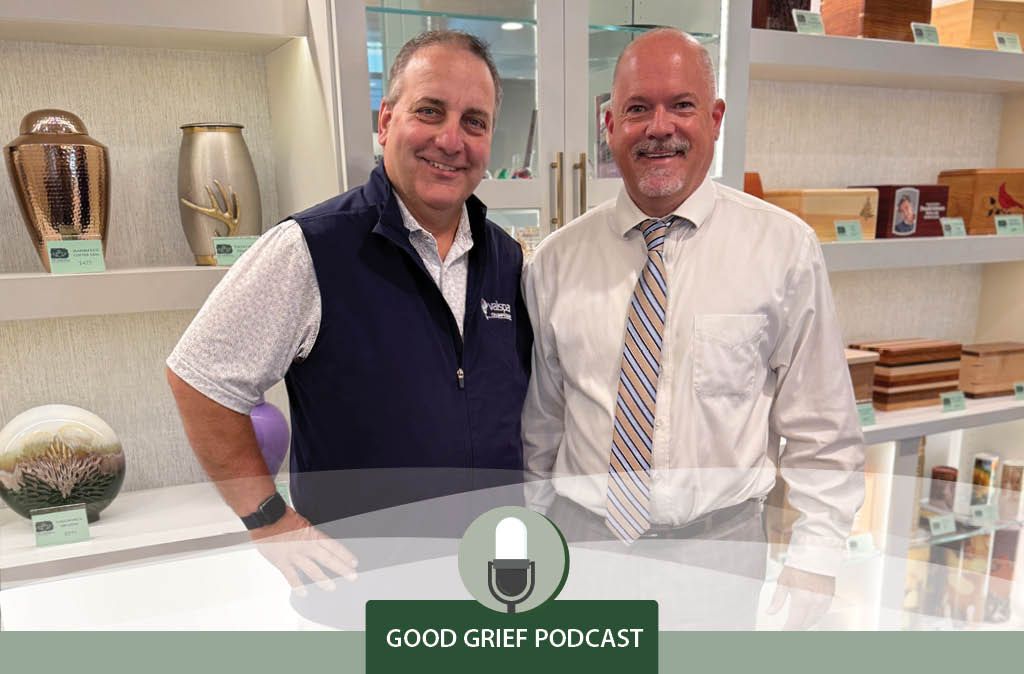
Those are exactly the questions Mike O’Connell answers in this episode of The Good Grief Podcast.
Rather than avoiding the details, Mike walks listeners through the entire process with the same transparency he uses when talking with families at O’Connell Family Funeral Homes.
It Starts With a Phone Call
The cremation process begins long before anyone enters the crematory.
When a death occurs, the funeral home may receive a call from a hospital, nursing home, medical examiner or family.
The first step is understanding the family’s wishes.
If arrangements have already been made, the team can begin moving forward with that information. If not, questions need to be answered, including whether the family would like an opportunity to see their loved one before cremation.
Some families choose a private family viewing without embalming or a traditional casket.
Mike explains that timing matters because the body naturally begins to change after death. Funeral professionals evaluate whether a viewing is possible and communicate honestly with the family about what to expect.
Why Cremation Doesn’t Happen Immediately
One of the biggest surprises for many people is that cremation cannot simply happen immediately after death.
In Wisconsin, Mike explains that there is a required waiting period before cremation.
There also must be authorization confirming that cremation can move forward.
Why?
Because cremation is permanent.
Once it occurs, there is no opportunity to examine the body later if questions arise surrounding the death.
That is why medical professionals and the medical examiner play an important role before authorization is granted.
Identity Is Checked Again and Again
Another common concern families have is simple:
“How do I know those are really my loved one’s cremated remains?”
O’Connell Family Funeral Homes uses several layers of identification.
The person is identified when they arrive, paperwork accompanies the process, and a numbered titanium medallion stays with them through cremation because it can withstand the heat.
That medallion then remains with the cremated remains afterward.
Mike also explains that cremation requires several pieces of paperwork and authorization before the process begins.
The goal is simple: remove guesswork.
What Happens Before Cremation?
Before cremation, the team checks for several things.
Was the person a veteran?
Does the family want fingerprints or other keepsakes?
Is there jewelry that needs to be removed?
Are there medical devices or other considerations crematory operators need to know about?
Once cremation occurs, some of those opportunities are gone. That’s why the checks happen beforehand.
For veterans, O’Connell Family Funeral Homes also offers a meaningful tribute by retiring an American flag through cremation with the veteran.
What Happens Inside the Crematory?
Mike describes cremation as a carefully controlled process involving heat, airflow and timing.
The person is placed in an alternative cremation container and moved into the cremation chamber.
The temperature and airflow are carefully managed throughout the process. Factors such as body size and previous cremations that day can affect how the crematory operator approaches each case.
A typical cremation takes a little over two hours, although the exact timing can vary.
The goal is not simply high heat. The process has to be controlled so combustion happens efficiently and safely.
What Happens After Cremation?
When cremation is complete, what remains is primarily bone.
Those remains must cool before they can be safely handled.
Any metal, such as surgical implants, rods or screws, is separated and recycled rather than discarded.
The remaining bone is then placed into a processor, which reduces it to the consistency most people recognize as cremated remains.
Mike describes the final texture as similar to coarse sand or fine gravel rather than ash from a fireplace.
The identification medallion remains with the cremated remains, along with documentation for the family.
Families Have More Options Than They Realize
Cremation also gives families many choices for what happens next.
Some families choose an urn.
Others keep a small portion in memorial jewelry.
Some scatter cremated remains at a meaningful location.
Mike even discusses options involving memorial diamonds, tattoos, reefs and other creative tributes.
There is no single right answer.
The important thing is choosing something that feels meaningful to the family and reflects the person being remembered.
Understanding Can Bring Peace
For many people, cremation feels mysterious simply because no one has ever explained it.
That’s what makes this episode different.
Mike doesn’t shy away from the questions people are curious about. Instead, he explains the process openly, respectfully and in plain language.
Because when families understand what happens behind the scenes, cremation can feel less unknown and much more human.
As Mike explains near the end of the conversation, it is ultimately a professional, detailed and dignified process designed to care for the person and their family every step of the way.
KEY TAKEAWAYS
- Cremation involves several steps before the actual cremation begins.
- Families may still choose a private viewing before cremation.
- Cremation requires authorization and cannot always happen immediately after death.
- Multiple forms of identification help ensure the correct person remains connected to their cremated remains.
- Families should decide about fingerprints, jewelry and keepsakes before cremation takes place.
- Crematory operators adjust the process based on factors including body size and temperature.
- A typical cremation takes a little over two hours, although timing varies.
- Medical implants and other metals are removed after cremation and recycled.
- Cremated remains are primarily processed bone rather than traditional fireplace-type ash.
- Families have many choices for keeping, scattering or memorializing cremated remains.
- Transparency and education can help make cremation feel less mysterious and more understandable.
MEMORABLE QUOTES
Mike O'Connell
“Once you cremate, you can’t go back.”
“It’s all about education.”
“We just basically covered all the details around what happens, and it’s a dignified process.”
“Document details.”
“Would you want your loved one just sitting 10 days, two weeks?”
“We saw the change and embraced it.”
Pete Waggoner
“I can’t tell you how little I’ve known about this process.”
“It’s professional. It’s dignified. It’s detailed.”
“It’s something I think everybody’s always kind of wanted to hear firsthand.”
“There’s a lot of opportunity, a lot of flexibility, and some things you don’t even think about.”
RESOURCES

