
Forever Ink: When Memory Becomes Art
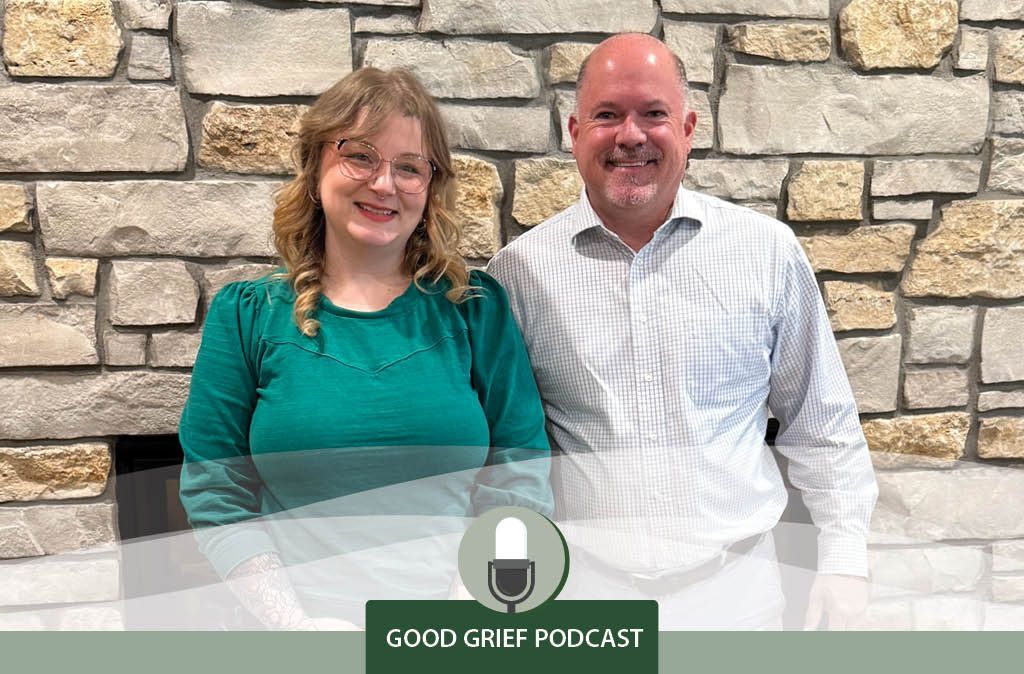
In this powerful and unexpectedly uplifting episode of The Good Grief Podcast, Mike O’Connell and host Pete Waggoner sit down with Minneapolis tattoo artist Carlen Gil to explore one of the most personalized memorial options available today: incorporating cremated remains into tattoo ink.
From the history of tattooing to the science behind cremation ink refinement, this episode blends artistry, trust, grief, and legacy. Carlen shares the emotional responsibility of tattooing something that will live on someone’s body forever, while Mike explains how families can transform cremated remains into a meaningful, lasting tribute.
The result is a conversation that challenges stereotypes about both funeral care and tattoo artistry — and highlights the deep humanity shared between them.
Episode Timestamps
00:00:36 – Introduction to tattoo artist Carlen Gil
00:01:47 – Why people choose tattoos: decorative vs sentimental
00:03:54 – Breaking stereotypes: funeral directors and tattoo artists
00:09:34 – Introducing cremated remains in tattoo ink
00:10:00 – The four-step cremation ink refinement process
00:12:26 – Most common memorial tattoo requests
00:13:54 – The history and symbolism of skull imagery
00:16:00 – Do tattoos hurt? Placement and pain explained
00:20:41 – Cover-ups, name tattoos, and tattoo regret
00:24:00 – How tattoos age over time
00:27:30 – Why cremation tattoos are growing in popularity
00:29:00 – The long history of tattooing across cultures
00:30:36 – Why licensing and consultation matter
00:33:00 – Tattoo “flash” and choosing the right design
00:34:53 – How O’Connell Family Funeral Homes facilitates the process
Takeaways
- Memorial tattoos using cremated remains are becoming more common and deeply personal.
- Tattooing is a collaborative process built on trust between client and artist.
- Cremation ink undergoes a rigorous refinement and sterilization process before use.
- Black ink works best because carbon is more stable and recognizable to the body.
- Tattoos age and evolve with the body — thoughtful design ensures longevity.
- Licensed, trained artists and proper consultation are essential for safety.
- Personal memorialization is evolving beyond traditional urns and headstones.
Memorable Quotes
Carlen Gil:
“It's just like these tattoos are gonna be with people the most beautiful moments of their lives.”
“It is permanent, so let's get it right.”
“I always say name tattoos are a curse.”
“I think that's actually one of the most beautiful parts of tattooing — it ages with people.”
“Ultimately, my goal for everybody is to love their tattoos, whether I'm doing it or someone else is.”
Mike O’Connell:
“I think it's the most personalized way to memorialize somebody.”
“We're seeing that this is up and coming.”
“Just let O’Connell’s take care of it.”
“It's not much — just about one ounce.”
Resources Mentioned
- Engrave Ink (cremation ink processing partner)
- The Remover (tattoo removal service referenced)
- Carlen Gil – carlin.tattoo@gmail.com
- Instagram: @carlentatooine
Transcript
Disclaimer:
This podcast is produced with the aim to provide accurate and insightful information. Please note that the transcripts are generated with the use of AI and edited, but may not reflect a 100 percent accurate representation of the original discussions. There might be minor discrepancies in the spoken content due to editing for clarity or brevity. We encourage listeners to refer to the original audio for the most faithful representation of the episode’s content.
[00:00:26] Pete Waggoner, Host: another great Good Grief Podcast, along with Michael O'Connell from the O'Connell Family Funeral Homes. Mike, how are you doing?
[00:00:33] Mike O'Connell, O'Connell Family Funeral Homes: Doing great. Thank you.
[00:00:34] Pete Waggoner, Host: We've got a good one today, don't we?
[00:00:36] Mike O'Connell, O'Connell Family Funeral Homes: I like it.
[00:00:37] Pete Waggoner, Host: Carlin Gill from Minneapolis joins us here today.
[00:00:39] Pete Waggoner, Host: I can't wait to get your perspective on everything, so, let's get started. First, thanks for taking the time outta your day to join us.
[00:00:46] Pete Waggoner, Host: Can you give us a little background about yourself and what drew you into the tattoo artistry industry?
[00:00:52] Carlen Gil, Tattoo Artist: I've been an artist my entire life. And I went to college at mcad. I majored in fine art, painting and drawing. [00:01:00] And then after I graduated I didn't know what I was gonna do with that.
[00:01:03] Carlen Gil, Tattoo Artist: And so I worked at kitchens and did pastry chef stuff for a while. And then I had my first son and after I had him, ive had a very perspective moment where I was like, what am I doing with my life? I'm just working and not actually like doing what I want to be doing.
[00:01:20] Carlen Gil, Tattoo Artist: Mm-hmm. And so that's when I decided that it was time to pursue my dream job and that's what got me here.
[00:01:29] Pete Waggoner, Host: So in your dream job
[00:01:31] Guest: Yeah.
[00:01:32] Pete Waggoner, Host: In creating tattoos?
[00:01:33] Carlen Gil, Tattoo Artist: Yeah.
[00:01:34] Pete Waggoner, Host: Kinda wanna talk about that a little bit because, all you need to do is walk down the road and you can see some form of artistry there.
[00:01:40] Carlen Gil, Tattoo Artist: Mm-hmm.
[00:01:40] Pete Waggoner, Host: What do you feel the main reason people do have tattoos created for them and what do they say?
[00:01:47] Carlen Gil, Tattoo Artist: Oh my gosh, there's so many reasons. I feel like nowadays it's more mainstream decorative. Tattoos have come. More popular. But a lot of the times it's really sentimental as well.
[00:01:58] Carlen Gil, Tattoo Artist: I always say there's like this first [00:02:00] tattoo paralysis where like your first tattoo has to be this like really big special thing because it's the first one. And then people who have a bajillion tattoos like me, I'm like, I don't know. You wanna put a smiley face, right? Yeah. So I feel like there's like this, kind of spectrum of it has to be really special to sometimes if it doesn't mean anything, that's also fun too.
[00:02:19] Pete Waggoner, Host: Do you find when you're working with someone and you're working what their vision would be, do you feel a connection there of wow, I really know what they're trying to say.
[00:02:28] Carlen Gil, Tattoo Artist: Yeah, I actually think about this probably way too much,
[00:02:32] Pete Waggoner, Host: right?
[00:02:32] Carlen Gil, Tattoo Artist: I like the fact that people trust me with their ideas and like something that's really meaningful to them. And then also trust my vision as an artist to translate that into something that would be tattoo able. And then on top of that, like having them carry that around with them for the rest of their lives.
[00:02:49] Carlen Gil, Tattoo Artist: It's just like these tattoos are gonna be with people the most. Beautiful moments of their lives.
[00:02:53] Pete Waggoner, Host: Yeah.
[00:02:54] Carlen Gil, Tattoo Artist: And that I like think about that at the end of the day a lot. It just is a very oh my God. Like the amount of trust that [00:03:00] people give me is just really beautiful.
[00:03:01] Pete Waggoner, Host: I suppose that can be a little overwhelming.
[00:03:03] Carlen Gil, Tattoo Artist: Yeah.
[00:03:03] Pete Waggoner, Host: Right. I mean, whew
[00:03:04] Carlen Gil, Tattoo Artist: type of thing. Yeah. No pressure.
[00:03:05] Pete Waggoner, Host: Right, right.
[00:03:06] Mike O'Connell, O'Connell Family Funeral Homes: So this is very personal for Pete. He's asking a lot of questions 'cause he wants to know. He spent a lot of time looking into one and spent a lot of money on one. But after eight days, when he licked it on his arm, it went away. And so he was, he felt a little bit frustrated.
[00:03:22] Mike O'Connell, O'Connell Family Funeral Homes: Wait a minute.
[00:03:23] Pete Waggoner, Host: No. It is funny. I've, I have, I. Personally, Troy with the idea quite a bit. Yeah. But I've never done it.
[00:03:28] Carlen Gil, Tattoo Artist: Yeah.
[00:03:29] Pete Waggoner, Host: But I, now I'm old and I'm like, is this too old to do this?
[00:03:33] Carlen Gil, Tattoo Artist: Never. I had a lady come in, she was the coolest lady.
[00:03:35] Carlen Gil, Tattoo Artist: She came into the shop last week. She drove a Vespa and I was like, first of all, queen, right? Yeah. Right. And she came in, she was like
[00:03:41] Pete Waggoner, Host: 1985,
[00:03:42] Carlen Gil, Tattoo Artist: had a bunch of tattoos. She had to be probably late seventies, maybe early eighties. Wow. And she came in with a couple ideas and I was, and we had a great conversation and she's cool, I'll see you in a couple weeks.
[00:03:53] Carlen Gil, Tattoo Artist: Like you're never too old.
[00:03:54] Pete Waggoner, Host: All right. That's good to hear. What do you find that, oh, I'm sorry.
[00:03:57] Mike O'Connell, O'Connell Family Funeral Homes: I was just gonna say, it's really interesting when you think about it. [00:04:00] My industry, we get classified or stereotyped as. Dark and drew me, and mm-hmm. And we deal with death and
[00:04:09] Carlen Gil, Tattoo Artist: mm-hmm.
[00:04:10] Mike O'Connell, O'Connell Family Funeral Homes: We're, very stoic.
[00:04:12] Mike O'Connell, O'Connell Family Funeral Homes: Which isn't true. But you on the other hand, as a tattoo artist, are super known as creative and free spirited. Sure. And I don't think of any that I know of tattoo artists that are a stick in the mud. I mean, they're always like, I
[00:04:25] Carlen Gil, Tattoo Artist: know a few.
[00:04:25] Pete Waggoner, Host: Yeah. Like in any industry. I do have a question though in that regard.
[00:04:29] Pete Waggoner, Host: Do you ever get into a position where somebody wants to do something and you go, that's really an old school vibe, man. I mean, maybe that or do you like guide them into what you think might be better situation?
[00:04:42] Carlen Gil, Tattoo Artist: So I always say, so the way I view my job is I'm a technician, but also an artist.
[00:04:48] Pete Waggoner, Host: Yeah.
[00:04:48] Carlen Gil, Tattoo Artist: So I have, if you want something that you found on the internet. I'll try to manipulate it so it's unique to you and not stealing someone else's work, but I'll do whatever you want. Like ultimately, [00:05:00] I always tell my clients, I'm like, you're the boss. I'll do whatever you want. I try to direct people in the direction of longevity wise, that's not gonna look great.
[00:05:09] Carlen Gil, Tattoo Artist: Here's how this tattoo is gonna age, here's how whatever, where it is on your body. Just things to consider. Yeah. And I give them all the information. They said, ultimately, here's all this information. Now you can decide what you wanna do with that. If you're like, let's still go, then I'm like, let's go.
[00:05:25] Carlen Gil, Tattoo Artist: But also like I love old school tattoos. I think I love tattooing at all, and I think each genre and generation of tattooing has its own important. and relevance. And so if you're referencing something maybe like an old, I don't know, like a Tasmanian devil or something mm-hmm. I'm like, I love that.
[00:05:44] Carlen Gil, Tattoo Artist: My favorite part is giving someone a tattoo and then they look in the mirror and they're like, ah, I look so cool. Yeah, you do. I think also. It's not my tattoo, it's their tattoo. And I'm just facilitating that for them. As soon as it goes on their body, it's no longer [00:06:00] mine.
[00:06:00] Carlen Gil, Tattoo Artist: It's not my artwork, it's their body now. So, so
[00:06:02] Pete Waggoner, Host: you can consult from here to there, but in the end it is, it's your tattoo, like you said,
[00:06:07] Carlen Gil, Tattoo Artist: correct? Yeah. And it's also like I am really open to feedback too. If people are like I love your design, but I. Wanna change this, and this.
[00:06:14] Carlen Gil, Tattoo Artist: Like I am totally open to that. I am literally, it's doesn't hurt my feelings. Like people are like, I'm so sorry. I'm like, please don't apologize. And I also have the same thing with moving the tattoo. We put a stencil on before we start. And
[00:06:27] Pete Waggoner, Host: wow. I was just gonna
[00:06:28] Mike O'Connell, O'Connell Family Funeral Homes: ask
[00:06:28] Pete Waggoner, Host: Never even thought of that.
[00:06:29] Carlen Gil, Tattoo Artist: Yeah. And people are like, oh, I'm so sorry. Can we move it a little to the left? And I'm like, first of all, every time you apologize, you owe me $10.
[00:06:34] Mike O'Connell, O'Connell Family Funeral Homes: The bill
[00:06:35] Carlen Gil, Tattoo Artist: is ticking. Yeah. So, it is permanent, so let's get it right. You know what I mean? It's not about me. I don't have to look in the mirror and see this every day.
[00:06:43] Carlen Gil, Tattoo Artist: You do. So,
[00:06:44] Mike O'Connell, O'Connell Family Funeral Homes: so do you have a certain program that you, when they come in with that Tasmanian devil, like you say, and it's very detailed. So do you then take that, put it into some program that makes a schematic and that template, like you say, to put on them?
[00:06:58] Carlen Gil, Tattoo Artist: I use a program called [00:07:00] procreate and it's basically just like I, it's on an iPad and I still draw it.
[00:07:05] Carlen Gil, Tattoo Artist: So if someone gives me a reference, I'll use that, but I still draw from that. Sometimes, depending on what it is, I'll also draw, like on paper I find that script is easier or looks better when it's done by hand. It just has that more flow has better flow. So a lot of times when people want hand done script, I'll do it on paper and then we just print it out.
[00:07:27] Carlen Gil, Tattoo Artist: If you do it on the iPad. And then you scan it. We have a stencil maker and it basically is photographic, exposing I dunno, mechanism. Sure. Thingy box. Yeah. And so the light exposes it transfers the image onto a piece of like carbon paper. And then, we cut that out, put a little stencil goo on your skin, put it on there.
[00:07:49] Carlen Gil, Tattoo Artist: And that's where you can go, okay, how does that look? And then you can say, I want it a little bit to the left and up, and then, yeah.
[00:07:55] Pete Waggoner, Host: You could be there for hours.
[00:07:56] Carlen Gil, Tattoo Artist: Oh, correct.
[00:07:57] Pete Waggoner, Host: No,
[00:07:58] Carlen Gil, Tattoo Artist: seriously. Yeah. I can only
[00:07:59] Pete Waggoner, Host: imagine. [00:08:00]
[00:08:00] Mike O'Connell, O'Connell Family Funeral Homes: So when you were growing up, were you one of those kids that was dueling and scrolling in your book, in school?
[00:08:06] Carlen Gil, Tattoo Artist: Yes. Yeah. Yeah. Oh
[00:08:08] Mike O'Connell, O'Connell Family Funeral Homes: yeah. 'cause you have to be super creative to do that. I couldn't do it.
[00:08:10] Mike O'Connell, O'Connell Family Funeral Homes: Yes,
[00:08:11] Carlen Gil, Tattoo Artist: I got in trouble for that a lot. But also I feel like I learn and listen better when I'm doing things with my hands. And so I find that it's actually really strange when I'm drawing. Sometimes I'll listen to a podcast or a audio book or watch TV or like just have background noise.
[00:08:27] Carlen Gil, Tattoo Artist: And I remember when I like print out my drawing or when I'm tattooing it, I'm like, oh yeah, this is the part of the book. Because like my brain associates that part of the drawing with like the, so,
[00:08:37] Mike O'Connell, O'Connell Family Funeral Homes: so what I hear you saying is that you're gonna start listening to the Good Greek podcast when you do 'em and they're all gonna be skulls now.
[00:08:43] Pete Waggoner, Host: Yeah. So you are a full fledged artist.
[00:08:47] Carlen Gil, Tattoo Artist: Yeah.
[00:08:47] Pete Waggoner, Host: When did you come to the realization that you, I guess I would say could title yourself that you like, dang, I am.
[00:08:55] Carlen Gil, Tattoo Artist: I still really don't feel like that,
[00:08:57] Pete Waggoner, Host: right?
[00:08:57] Carlen Gil, Tattoo Artist: I mean, I feel like yeah, it's it's [00:09:00] very like almost imposter syndrome. Me. I'm like, I can't believe, like this is what I get to do and make money doing it.
[00:09:07] Carlen Gil, Tattoo Artist: It's just, it's a lot of the times I'm very like, wait, what is this real life?
[00:09:09] Mike O'Connell, O'Connell Family Funeral Homes: You love
[00:09:10] Mike O'Connell, O'Connell Family Funeral Homes: what
[00:09:10] Mike O'Connell, O'Connell Family Funeral Homes: you do. Yeah.
[00:09:10] Pete Waggoner, Host: How many people can really say that and mean it?
[00:09:13] Mike O'Connell, O'Connell Family Funeral Homes: Mm-hmm.
[00:09:13] Pete Waggoner, Host: Yeah. It's pretty cool.
[00:09:15] Mike O'Connell, O'Connell Family Funeral Homes: It's
[00:09:15] Mike O'Connell, O'Connell Family Funeral Homes: a
[00:09:15] Mike O'Connell, O'Connell Family Funeral Homes: gift.
[00:09:16] Carlen Gil, Tattoo Artist: I have a degree in fine art, but I always joke, I joke about it all the time 'cause it's not I'm like, that's not a real degree
[00:09:21] Pete Waggoner, Host: but it kind is.
[00:09:22] Carlen Gil, Tattoo Artist: But I mean, I'm paying for it like it is
[00:09:24] Mike O'Connell, O'Connell Family Funeral Homes: That makes it real.
[00:09:25] Carlen Gil, Tattoo Artist: Yeah.
[00:09:25] Pete Waggoner, Host: But I mean, it put you in the position you are now. Yeah. And I think the journey is. Put you to this. So you're obviously here for a reason, right?
[00:09:34] Carlen Gil, Tattoo Artist: Mm-hmm.
[00:09:34] Pete Waggoner, Host: And there's a process that takes cremated remains and converts them into tattoo ink as an additive.
[00:09:41] Pete Waggoner, Host: So we'll start. Mike, how does that process work?
[00:09:46] Mike O'Connell, O'Connell Family Funeral Homes: It's actually pretty simple, it's complicated but simple. It's four steps. So before there are thermal processing which heat. They perform a light pre-filtration step to remove any large debris or unprocessed fragments. So in other words, [00:10:00] when someone's cremated, they're reduced to cremated remains.
[00:10:04] Mike O'Connell, O'Connell Family Funeral Homes: But there's still some that are bigger than a piece of sand and they don't want that kind of, texture to it. So all ashes. And the second part is all ashes, regardless of the cremation type. What I mean is there's acclamation, cremation. They undergo a graphite based. Paralysis and a medically sterile oxygen controlled chamber, and it's at 2,800 degrees Fahrenheit that this step sterilizes the ashes completely.
[00:10:31] Mike O'Connell, O'Connell Family Funeral Homes: Because you can have,
[00:10:32] Pete Waggoner, Host: do you do that here?
[00:10:33] Mike O'Connell, O'Connell Family Funeral Homes: No.
[00:10:33] Pete Waggoner, Host: No?
[00:10:33] Mike O'Connell, O'Connell Family Funeral Homes: Okay. No. This is only the company. There's only certain companies that do
[00:10:36] Pete Waggoner, Host: it. It's niche. Okay.
[00:10:37] Mike O'Connell, O'Connell Family Funeral Homes: Yeah.
[00:10:37] Pete Waggoner, Host: Okay.
[00:10:38] Mike O'Connell, O'Connell Family Funeral Homes: And so then that refines the trace minerals or the residue, the organic content, and it produces a chemically stable carbon structure suitable for skin Safe, Inc.
[00:10:49] Mike O'Connell, O'Connell Family Funeral Homes: And then following the paralysis, the ashes are passed through a three stage filtration system, which this ultra fine, consistently is critical for the smooth blending, [00:11:00] the long-term instability, and the safe use and commemorative cremation tattoos. And then the fourth is that they use a lab grade mechanical agitation to thoroughly blend the refined carbon into the proprietary ink base.
[00:11:15] Mike O'Connell, O'Connell Family Funeral Homes: And so then they'll get a little jar of it you ever seen those little touchups for your stove? The little paint that comes in that little, yeah, that's what it looks like. And then they'll take that to their, they'll take that to Carlin and then she'll use that with her ink.
[00:11:29] Pete Waggoner, Host: So I'm the, I'm your client.
[00:11:31] Pete Waggoner, Host: I will bring that and then you will just add that to the ink port right in?
[00:11:36] Carlen Gil, Tattoo Artist: No, I would use that instead of whatever I'm using. So it comes in black ink.
[00:11:40] Carlen Gil, Tattoo Artist: It's a bottle of ink that's already been processed.
[00:11:44] Pete Waggoner, Host: Is it the same when you get that, is that the same as any ink you pull off the shelf?
[00:11:49] Pete Waggoner, Host: Or do you have things you have to consider?
[00:11:51] Carlen Gil, Tattoo Artist: So all tattooing have sort of different consistencies. Mm-hmm. Black usually across the board is pretty much the same. [00:12:00] Black ink is made from carbon, which is. Basically the same thing. It's which makes it easiest to tattoo and have long like longevity because your body identifies carbon as something familiar instead of a foreign body.
[00:12:15] Carlen Gil, Tattoo Artist: So that's why black ink stays the best.
[00:12:17] Pete Waggoner, Host: Is this a common occurrence In today's world,
[00:12:20] Mike O'Connell, O'Connell Family Funeral Homes: it's becoming more and more.
[00:12:22] Carlen Gil, Tattoo Artist: Yeah.
[00:12:22] Mike O'Connell, O'Connell Family Funeral Homes: It's highly personalized. What else can you do? That's even close to that.
[00:12:26] Pete Waggoner, Host: What do, Mike, what do people typically symbolize image or phrase for their tattoos? Is there a commonality to that?
[00:12:33] Mike O'Connell, O'Connell Family Funeral Homes: I'm gonna let Carlin answer that one.
[00:12:36] Mike O'Connell, O'Connell Family Funeral Homes: 'cause I think she would be best to answer that. Like, when people come to you, what's a common for like a memorial?
[00:12:42] Pete Waggoner, Host: Memorial
[00:12:43] Pete Waggoner, Host: or
[00:12:43] Pete Waggoner, Host: something?
[00:12:43] Guest: Yeah. Butterflies are really common. Angels. Sometimes people want actual, like portraits or imagery of the person that they've lost. Or sometimes it's like random stuff, like they, like an inside joke, which is always fun too.
[00:12:58] Guest: But yeah, it's it's across the [00:13:00] board,
[00:13:00] Mike O'Connell, O'Connell Family Funeral Homes: like what would be your top five requests
[00:13:03] Guest: for memorial tattoos
[00:13:04] Mike O'Connell, O'Connell Family Funeral Homes: or just any, maybe
[00:13:06] Carlen Gil, Tattoo Artist: any tattoos. Like script is usually a really big one. A lot of people want like something in someone's handwriting. So if they wrote them a letter or a card or something or butterflies are super common.
[00:13:20] Carlen Gil, Tattoo Artist: Even sometimes birds, different birds. Skulls are a big one.
[00:13:25] Mike O'Connell, O'Connell Family Funeral Homes: Skull?
[00:13:26] Carlen Gil, Tattoo Artist: Yeah.
[00:13:26] Mike O'Connell, O'Connell Family Funeral Homes: Like the Vikings?
[00:13:27] Carlen Gil, Tattoo Artist: No, like the
[00:13:28] Mike O'Connell, O'Connell Family Funeral Homes: skull.
[00:13:29] Carlen Gil, Tattoo Artist: Like a skull. Skull.
[00:13:29] Mike O'Connell, O'Connell Family Funeral Homes: I thought you said skull. I used, I probably did. People say that over the cross, the river.
[00:13:34] Carlen Gil, Tattoo Artist: I don't do sports, so I don't
[00:13:36] Mike O'Connell, O'Connell Family Funeral Homes: What's the, okay, so this is my question.
[00:13:39] Mike O'Connell, O'Connell Family Funeral Homes: People are. Scared, terrified of death in society. We don't want to talk about it.
[00:13:44] Carlen Gil, Tattoo Artist: Mm-hmm.
[00:13:44] Mike O'Connell, O'Connell Family Funeral Homes: Right. We just wanna stay away from it. Yet one of the most popular is skulls. Why? If you're so scared of it, why would you want to put a skull on you? I don't understand it.
[00:13:54] Carlen Gil, Tattoo Artist: Yeah. I think it honestly dates back to a
[00:13:56] Carlen Gil, Tattoo Artist: long history of art. [00:14:00] Back even digging back to like Dutch painters, they used to paint memento Moray paintings, which basically were paintings that symbolize that everything in life is temporary. So as they would paint, they would have a still life of. Fruit animals meat. And then as they would paint it, the still life would decay and they would paint the decay as it was happening.
[00:14:21] Carlen Gil, Tattoo Artist: And so I think that kind of projected across time is like this permanence and impermanence of life and how fundamentally everything is temporary and we're all, I think that's a huge one, but also. We all have the same skeletal structure. And it's the one thing as like a human that we have in common that we're all skeletons under
[00:14:46] Mike O'Connell, O'Connell Family Funeral Homes: Yeah, no I get that.
[00:14:47] Pete Waggoner, Host: How about placement? Do you find people want things more visible or more private? What is there a balance to that?
[00:14:56] Carlen Gil, Tattoo Artist: It depends, right? If it's someone's first tattoo, I [00:15:00] usually recommend that they don't get it somewhere, like your hands or your face or your neck.
[00:15:05] Carlen Gil, Tattoo Artist: Usually like traditionally tattooers call those job killers, so, so if I have an 18-year-old coming in, I'm like, oh, that's on my hand. I'm like let's not, it's one of those things where it's I'll of give you all the information. If you still want her hand, like I'll still do it on your hand, but I gave you the talk, mm-hmm. So, really commonplace. A wrist, like the inside of your arm.
[00:15:26] Mike O'Connell, O'Connell Family Funeral Homes: Does that hurt? I mean, that looks like it hurts.
[00:15:29] Pete Waggoner, Host: It totally does.
[00:15:30] Mike O'Connell, O'Connell Family Funeral Homes: It looks like it. I've done IDs there on people and those are the most painful ones on the inside of the wrist. Oh,
[00:15:36] Pete Waggoner, Host: I just I'm
[00:15:37] Mike O'Connell, O'Connell Family Funeral Homes: right
[00:15:37] Pete Waggoner, Host: now, I get goosebumps
[00:15:39] Carlen Gil, Tattoo Artist: that
[00:15:39] Pete Waggoner, Host: you
[00:15:39] Guest: about
[00:15:39] Pete Waggoner, Host: it.
[00:15:39] Carlen Gil, Tattoo Artist: You're like,
[00:15:40] Pete Waggoner, Host: I can't do it.
[00:15:41] Carlen Gil, Tattoo Artist: Okay. So I always say this because everyone, that's the number one thing everyone asks me when I tell them what my job is. Do tattoos hurt? And the answer is yes. All tattoos hurt, period. End of story. You have a needle going into your skin, it's gonna hurt. However, some places hurt more or have more sensation than others.
[00:15:59] Carlen Gil, Tattoo Artist: And I like to [00:16:00] say like the soft underbelly of your body. So like the insides, if you were thinking like if you were an animal, then like these are all your important area. We are animals, but this is all the important stuff like right here. Your body's going to make that more painful, so you're like, Hey, how about we don't stick needle in that part of our body?
[00:16:18] Carlen Gil, Tattoo Artist: So I always say the soft on our belly is the most painful part. Usually I think the easiest place for that I've gotten tattoo do is like the outside of the arm.
[00:16:26] Mike O'Connell, O'Connell Family Funeral Homes: Mm-hmm.
[00:16:26] Carlen Gil, Tattoo Artist: Top outside, top of the legs. For some reason the bottom of the legs and back of the legs is awful.
[00:16:32] Mike O'Connell, O'Connell Family Funeral Homes: Oh I can think of that.
[00:16:33] Carlen Gil, Tattoo Artist: Yeah,
[00:16:34] Pete Waggoner, Host: I know.
[00:16:34] Mike O'Connell, O'Connell Family Funeral Homes: I just think if somebody pinch in the back of my calf, I'd scream.
[00:16:37] Carlen Gil, Tattoo Artist: Do you
[00:16:37] Pete Waggoner, Host: have one in the back of your legs?
[00:16:38] Carlen Gil, Tattoo Artist: Yes, I have tattoos. I'm actually working on my back right now.
[00:16:41] Pete Waggoner, Host: I've heard that's not
[00:16:43] Carlen Gil, Tattoo Artist: the best.
[00:16:44] Pete Waggoner, Host: The back can be a problem.
[00:16:45] Carlen Gil, Tattoo Artist: So this is the thing. I had a baby six months ago. And so I was like, I'm gonna get my back tattooed.
[00:16:50] Carlen Gil, Tattoo Artist: Like I had a baby, I have had two babies. I'm like, let's go. I can do this wrong. Seriously incorrect. Yeah. I and one of my friends was working on it and we were joking [00:17:00] around and I was like, did I hurt your feelings or something because like, why does this hurt so bad?
[00:17:04] Pete Waggoner, Host: So there's a, there's one person I know that was gonna do the full back Yeah.
[00:17:08] Carlen Gil, Tattoo Artist: With
[00:17:08] Pete Waggoner, Host: a lot of color and there's a big deal going on there and it just stopped with the outline.
[00:17:14] Carlen Gil, Tattoo Artist: Oh yeah.
[00:17:14] Pete Waggoner, Host: Yeah. And there's like enough, I can't, and so that's the part that surprised me though.
[00:17:18] Carlen Gil, Tattoo Artist: Yeah.
[00:17:18] Pete Waggoner, Host: 'Cause I think Mike saying that inner wrist, Ooh,
[00:17:20] Carlen Gil, Tattoo Artist: yeah.
[00:17:21] Pete Waggoner, Host: Mm-hmm.
[00:17:21] Carlen Gil, Tattoo Artist: Yeah. So usually with bigger pieces, so my back right now is just lined.
[00:17:25] Pete Waggoner, Host: Yeah.
[00:17:25] Carlen Gil, Tattoo Artist: So, and that took a, my for as a client, my sitting time is like four hours. After four hours. I know. I'm like, if you touch me again, I'm gonna beat you up. Like it's very
[00:17:34] Pete Waggoner, Host: do you think that's pretty normal, four hours for most? Or are you a little longer?
[00:17:37] Carlen Gil, Tattoo Artist: It depends. Typically women sit longer than men.
[00:17:41] Carlen Gil, Tattoo Artist: No offense, but
[00:17:42] Pete Waggoner, Host: not taken. Trust me, we're good.
[00:17:44] Carlen Gil, Tattoo Artist: I have some client and I actually have noticed people who have chronic pain conditions. Actually sit a lot better. Really? That's crazy. They actually almost like a tense unit for them. It helps 'em distract from the pain that they have in their body all the time,
[00:17:57] Mike O'Connell, O'Connell Family Funeral Homes: which is Sure.
[00:17:57] Mike O'Connell, O'Connell Family Funeral Homes: Yeah.
[00:17:57] Carlen Gil, Tattoo Artist: Men usually don't sit the best. It [00:18:00] depends though.
[00:18:01] Mike O'Connell, O'Connell Family Funeral Homes: We often, when we get a cold, we are on hospice. Correct. So that makes sense.
[00:18:04] Carlen Gil, Tattoo Artist: Yes. You should see my husband, he hyperventilates when I tattoo him and it's scary.
[00:18:07] Pete Waggoner, Host: Oh, seriously?
[00:18:08] Carlen Gil, Tattoo Artist: Yeah. It's I'm like, calm down. It's
[00:18:10] Pete Waggoner, Host: just the thought.
[00:18:10] Mike O'Connell, O'Connell Family Funeral Homes: He use a harpoon or a regular needle. That's why.
[00:18:12] Carlen Gil, Tattoo Artist: I mean,
[00:18:13] Pete Waggoner, Host: so when it comes down to decision, like where this is going. It sounds if you're maiden, voyage, rookie first timer.
[00:18:20] Carlen Gil, Tattoo Artist: Mm-hmm. Mm-hmm.
[00:18:20] Pete Waggoner, Host: It's a joint decision where you may do some consultation again.
[00:18:24] Carlen Gil, Tattoo Artist: Yeah.
[00:18:24] Pete Waggoner, Host: Again, if you really have to, you'll do that, but you help. But if it's a, if it's more of a someone that's more veteran and has had quite a bit of work, you just say they put it where they want to.
[00:18:34] Carlen Gil, Tattoo Artist: Yes and no. I think that a lot of people don't realize that getting a tattoo is a collaborative.
[00:18:40] Carlen Gil, Tattoo Artist: Thing. So you have to be able to sort of, sort of trust your artist that they're gonna give you the best tattoo. So you might think I have a bunch of tattoos and I know it'll look good here. It's cool. But also here me out, so I think. Always, it's it's a collaboration between you and your artist, whether it's your first tattoo or your two hundreds,
[00:18:59] Pete Waggoner, Host: just like anything [00:19:00] else.
[00:19:00] Guest: Yeah. In
[00:19:00] Pete Waggoner, Host: that regard,
[00:19:01] Mike O'Connell, O'Connell Family Funeral Homes: is there you talked about the inside of the arm or the back of the calf as places, you might not suggest one, but do people get a little goofy, like on personal parts of their body and will you say, I'm not doing that.
[00:19:12] Guest: So the, I draw a hard line at anything that's offensive or would make me uncomfortable.
[00:19:19] Mike O'Connell, O'Connell Family Funeral Homes: Yeah.
[00:19:19] Carlen Gil, Tattoo Artist: But honestly I think maybe like a medical professional. Bodies are bodies. Are bodies. Sure. I don't really nudity and that part, like private parts of your body don't really bother me.
[00:19:31] Background: Mm-hmm.
[00:19:31] Carlen Gil, Tattoo Artist: But if it was a situation where someone was intentionally trying to make me uncomfortable, I would be like,
[00:19:37] Background: oh
[00:19:37] Carlen Gil, Tattoo Artist: yeah, not today.
[00:19:39] Background: Mm-hmm.
[00:19:39] Carlen Gil, Tattoo Artist: But that's the great part about my job as well, is I'm my own boss. So if someone's doing something, I'm like don't love that. You can leave, like goodbye. So, I'm always in charge of the situation ultimately and if something I don't feel is right or uncomfortable.
[00:19:56] Mike O'Connell, O'Connell Family Funeral Homes: How about, so a couple guys come in and they've been [00:20:00] having a few mm-hmm.
[00:20:01] Mike O'Connell, O'Connell Family Funeral Homes: And they think, ah, let's go get matching tattoos.
[00:20:04] Carlen Gil, Tattoo Artist: Yeah.
[00:20:04] Mike O'Connell, O'Connell Family Funeral Homes: Is there a point where you look and you say, I'm not doing that 'cause you're
inebriated and I'm not gonna have that come back and bite me.
[00:20:11] Carlen Gil, Tattoo Artist: Yeah, it's actually I'm not allowed to, I don't know Wisconsin, what the laws are, but in Minnesota I legally cannot tattoo someone who is visibly drunk.
[00:20:20] Mike O'Connell, O'Connell Family Funeral Homes: Mm-hmm.
[00:20:20] Carlen Gil, Tattoo Artist: Some people are secretive, I'm are you drunk?
[00:20:22] Pete Waggoner, Host: We call it functioning.
[00:20:23] Carlen Gil, Tattoo Artist: Yeah. Yeah. So it's I could get my license taken away if I tattooed someone who was like visibly Sure. Intoxicated. Yeah.
[00:20:31] Mike O'Connell, O'Connell Family Funeral Homes: That makes good sense. How often do people come in and say I got this, she was my girlfriend at the time and I thought it'd be good, and now I want to get rid of the Abigail on my forearm.
[00:20:41] Carlen Gil, Tattoo Artist: Yep.
[00:20:41] Mike O'Connell, O'Connell Family Funeral Homes: Then you have to figure out a word with Abigail in it, or what? Yeah, I
[00:20:45] Carlen Gil, Tattoo Artist: think I mean, first of all, I always say name tattoos are the a curse.
[00:20:50] Mike O'Connell, O'Connell Family Funeral Homes: Mm-hmm.
[00:20:50] Carlen Gil, Tattoo Artist: Don't ever get your significant other's name tattooed. It's a curse. But besides stepping from that is coverups just in general are a fun [00:21:00] problem to solve because you have to find an image or something that covers up what you're wanting to cover up without you being able to see the original piece.
[00:21:11] Carlen Gil, Tattoo Artist: Mm-hmm. And it's almost like. It's a puzzle sort of, you know what I mean? It's okay, if I do if it's Angela, is that what you said or what
[00:21:17] Mike O'Connell, O'Connell Family Funeral Homes: Abigail? Whatever it's, yeah.
[00:21:19] Mike O'Connell, O'Connell Family Funeral Homes: Insert name.
[00:21:20] Carlen Gil, Tattoo Artist: Yeah. So I'm like, okay, maybe we could put a black crow over it or something. And then all the areas where the crow is black, that's where the lettering will be.
[00:21:28] Carlen Gil, Tattoo Artist: Or maybe like where the wings are. 'cause there's a lot of texture there. You can hide it in there. Or we could do like flowers. Yeah.
[00:21:35] Mike O'Connell, O'Connell Family Funeral Homes: Is another dumb question. You get something on your clothes, you put bleach on it, right? To bleach it up. Yeah. Can you do that?
[00:21:41] Carlen Gil, Tattoo Artist: Like bleach a tattoo?
[00:21:42] Mike O'Connell, O'Connell Family Funeral Homes: Yeah. Can you soak your arm and bleach for three days or you
[00:21:45] Guest: probably don't do that.
[00:21:46] Mike O'Connell, O'Connell Family Funeral Homes: Yeah. Okay. That would be rough. I know it, you can't drink it for COVID, but I didn't know,
[00:21:50] Carlen Gil, Tattoo Artist: It's worth the shot, right? No. I have heard horror stories of like old school dudes like taking, seal wool to their tattoos.
[00:21:56] Mike O'Connell, O'Connell Family Funeral Homes: I've heard that.
[00:21:57] Carlen Gil, Tattoo Artist: Yeah.
[00:21:58] Mike O'Connell, O'Connell Family Funeral Homes: Holy man.
[00:21:58] Carlen Gil, Tattoo Artist: Yeah. But I, [00:22:00] good
[00:22:00] Mike O'Connell, O'Connell Family Funeral Homes: lord, basically rubbed their skin off with it.
[00:22:03] Carlen Gil, Tattoo Artist: Yes. Yeah.
[00:22:03] Mike O'Connell, O'Connell Family Funeral Homes: Oh my God.
[00:22:04] Carlen Gil, Tattoo Artist: Tattoo removal is very common now. There's a tattoo removal place that we work with is called the Remover.
[00:22:10] Carlen Gil, Tattoo Artist: I haven't had anything removed. I've heard that it's. Way more painful and it takes a way longer time 'cause they can't do it a lot at one session, basically. I had
[00:22:20] Pete Waggoner, Host: a friend that had one removed left arm and it was a a heart or a deeper from a significant other, they did it together and it was I to, to their credit, they said, Ooh, that's a tough one.
[00:22:34] Pete Waggoner, Host: That's gonna be six to eight. Sessions. Right. It was eight,
[00:22:38] Carlen Gil, Tattoo Artist: right?
[00:22:38] Pete Waggoner, Host: It's gone,
[00:22:38] Carlen Gil, Tattoo Artist: right?
[00:22:39] Mike O'Connell, O'Connell Family Funeral Homes: It is,
[00:22:39] Pete Waggoner, Host: yeah. It's gone.
[00:22:40] Mike O'Connell, O'Connell Family Funeral Homes: Does it look like they got a burn on their arm? No. Just really? Nope.
[00:22:44] Carlen Gil, Tattoo Artist: Yeah.
[00:22:44] Mike O'Connell, O'Connell Family Funeral Homes: What do they do? They inject, it's
[00:22:46] Pete Waggoner, Host: like a laser gun that goes,
[00:22:47] Mike O'Connell, O'Connell Family Funeral Homes: so they don't go to the hardware store and say, can you match this skin tone?
[00:22:51] Mike O'Connell, O'Connell Family Funeral Homes: And we need to find a ink outta it.
[00:22:53] Guest: That's a very good point because that you can also do that. You can basically put white over it or like a Oh
[00:22:59] Pete Waggoner, Host: wow. [00:23:00]
[00:23:00] Carlen Gil, Tattoo Artist: Or cream, but it's not gonna. Cover it. It just is gonna push back the color enough where you could then put something on top of it.
[00:23:07] Mike O'Connell, O'Connell Family Funeral Homes: Oh, sure, sure.
[00:23:07] Carlen Gil, Tattoo Artist: But aging wise, the color is going to fade faster than the black because the whole carbon situation.
[00:23:16] Carlen Gil, Tattoo Artist: So your body pushes out colored ink faster than it pushes out black. So eventually interesting. What would happen is that the color is going to be pushed out, and then you're gonna have. Coverup with coverup so it might end up just being a black blob.
[00:23:32] Pete Waggoner, Host: Mm-hmm. Interesting. So while we're in on this aging and the topic,
[00:23:37] Guest: yeah.
[00:23:37] Pete Waggoner, Host: Do you ever find maybe skin is a little tighter to the body when you're younger and it maybe gets looser. Does that change the art? Do you see that in older clients
[00:23:47] Guest: or no? Do you mean the same tattoo,
[00:23:48] Pete Waggoner, Host: I don't wanna say sagging. Yeah. But like saggy skin does that does that.
[00:23:52] Pete Waggoner, Host: I mean, do you see,
[00:23:53] Guest: yeah, I think that's actually one of the most beautiful parts of tattooing is that it ages with people [00:24:00] and it, over time it changes with the person. If you have a good artist it could be something that ages with you and ages beautifully.
[00:24:11] Guest: I think. A lot of there's a lot of like really small, tiny tattoos that are really in right now, and those don't age as well because the way that your body processes and breaks down the tattoos is it breaks it apart and then drains it through your lymph nodes. So I tell people just like a number, expect every seven years that it expands.
[00:24:33] Guest: So if you think about that, you have a tiny little heart that's the size of this, in seven years you're gonna have a circle.
So,
[00:24:42] Background: right.
[00:24:42] Guest: It's as far as aging and the way that like skin expands and shrinks over time your design should be done to compensate for that. And if you were like, Nope, I don't want that, then it's your artist's job to be like, okay.
[00:24:55] Guest: But just letting you know that in, I always say seven years, I don't know, that's [00:25:00] just my number, right? Seven years this could possibly do this, and then 14 we're looking like this and then that, so on and so on. But as far as tattooing people with saggy or older skin, that's a whole nother thing too because the tattoo goes into your epidermis and then your dermis is underneath it.
[00:25:18] Guest: And so as you get older that the epidermis gets shallower and shallower. And so when you tattoo and you get into the dermis, it causes a blowout. And so it looks like a bruise, like the ink hits in there. It hits the fatty tissue and it goes.
[00:25:34] Pete Waggoner, Host: Wow.
[00:25:35] Guest: It's the scariest thing ever.
[00:25:36] Guest: It's happened
[00:25:37] Pete Waggoner, Host: to me. That freak me out. Yeah.
[00:25:38] Mike O'Connell, O'Connell Family Funeral Homes: You can't undo
[00:25:39] Pete Waggoner, Host: it. I mean, if I were you, I'd be like, Ooh,
[00:25:41] Guest: So the only time it happened to me, it was when I was very new to tattooing. I think it was like my first couple months
and I had a client come in. She was an older woman and she wanted something on her arm.
[00:25:50] Guest: And I wasn't, I didn't know 'cause I was very new and I tattoo her and I barely touched the needle and I could see it. The ink just went like exploded under her [00:26:00] skin. And I was like, oh my God. It was the worst feeling in the world. Did
[00:26:04] Pete Waggoner, Host: she know that was happening?
[00:26:05] Guest: I talked to her about it afterwards and she was like, oh my God.
[00:26:07] Guest: She was totally fine. She's the sweetest lady ever. But now when I have someone like an older. Client or someone who's has more aged skin or who doesn't take care of their skin as well. I tell them there is always this possibility of a blowout. And then I show 'em a picture of what a blowout looks like and what to look for.
[00:26:24] Guest: And there's not a whole lot you can do for a blowout. You can maybe like tattoo. A color over that, but there's, it's it happens.
[00:26:32] Pete Waggoner, Host: Got it.
[00:26:33] Guest: Yeah.
[00:26:33] Pete Waggoner, Host: What kind of feedback have you gotten from people that from this process? Circling back to from the Ink perspective and all that, have you received any feedback, Mike, from people that have done that?
[00:26:45] Mike O'Connell, O'Connell Family Funeral Homes: Yeah. 10 years ago, you didn't have people taking fingerprints or cremated remains and little urns. And so now you can have your cremated remains shot to the moon or put in a reef in the ocean. And so tattoo
[00:26:59] Guest: shot [00:27:00] to the really shot to the moon.
[00:27:00] Mike O'Connell, O'Connell Family Funeral Homes: Yeah.
[00:27:00] Guest: Is that real?
[00:27:01] Mike O'Connell, O'Connell Family Funeral Homes: Yeah.
[00:27:01] Pete Waggoner, Host: For real.
[00:27:02] Mike O'Connell, O'Connell Family Funeral Homes: Yeah.
[00:27:03] Mike O'Connell, O'Connell Family Funeral Homes: Or yeah.
[00:27:03] Guest: How do you know it goes there? It
[00:27:04] Pete Waggoner, Host: sounded like a saying, but
[00:27:05] Guest: it's
[00:27:06] Mike O'Connell, O'Connell Family Funeral Homes: true. Yeah. They can, yeah. They,
[00:27:08] Guest: I feel like they're just like, how do you know it goes to the moon though?
[00:27:11] Mike O'Connell, O'Connell Family Funeral Homes: You trust me.
[00:27:12] Guest: You're like, I have a guy.
[00:27:14] Pete Waggoner, Host: I have a guy.
[00:27:14] Mike O'Connell, O'Connell Family Funeral Homes: Like you said, I think you have to trust the artist.
[00:27:17] Guest: Yeah.
[00:27:17] Pete Waggoner, Host: Right, right,
[00:27:17] Guest: right.
[00:27:18] Guest: Trust, trust space.
[00:27:19] Mike O'Connell, O'Connell Family Funeral Homes: So yeah, we're seeing that this is a up and coming and that was the reason I wanted to do this podcast is to bring some light to it. 'cause it is, I think, the most personalized way to memorialize somebody.
[00:27:30] Pete Waggoner, Host: I
[00:27:30] Mike O'Connell, O'Connell Family Funeral Homes: do too. And I saw, from people that have been in treatment or in jails, they have taken a pin.
[00:27:37] Mike O'Connell, O'Connell Family Funeral Homes: Mm-hmm. I don't know how they did it or even got the material to do it, but I have seen some of the most intrinsic artistic tattoos that were done in jails.
[00:27:49] Guest: Mm-hmm.
[00:27:50] Mike O'Connell, O'Connell Family Funeral Homes: I just, that blows my mind.
[00:27:51] Guest: That's a joke that I tell a lot. Not a lot of people think it's funny, but I'm like, Hey, if I go to prison, I always have a job
[00:27:57] Mike O'Connell, O'Connell Family Funeral Homes: right on it.
[00:27:58] Mike O'Connell, O'Connell Family Funeral Homes: Really? No, that's a good one. I
[00:27:59] Guest: like [00:28:00] that. Tattooers are the best. The, that's the best job to have in jail.
[00:28:02] Pete Waggoner, Host: That's,
[00:28:03] Mike O'Connell, O'Connell Family Funeral Homes: does somebody bring 'em ink then, or what do they, how does that work?
[00:28:06] Guest: No, you can make a tattoo machine. From, I don't know exactly what they do, but it's like a battery. Then you take a pen and you break it apart.
[00:28:13] Guest: You use a battery in a rubber band and basically make a tattoo machine.
[00:28:18] Mike O'Connell, O'Connell Family Funeral Homes: That's what I'm talking about. That's
[00:28:19] Pete Waggoner, Host: crazy.
[00:28:20] Mike O'Connell, O'Connell Family Funeral Homes: That's creative, artistic.
[00:28:21] Guest: Yeah.
[00:28:21] Mike O'Connell, O'Connell Family Funeral Homes: When you think about that. But also like you were licking those nine volt batteries. I mean, you thought that was pretty good. You did it once. This is, they won up.
[00:28:28] Pete Waggoner, Host: I did that once.
[00:28:29] Mike O'Connell, O'Connell Family Funeral Homes: That's what I,
[00:28:29] Guest: but also like how that's cool, right? Like people even like in prison and in places where like you can't express yourself. People always find a way to
[00:28:37] Pete Waggoner, Host: Sure.
[00:28:37] Guest: Mark their bodies and that's
[00:28:39] Pete Waggoner, Host: pretty
[00:28:39] Guest: interesting
[00:28:40] Pete Waggoner, Host: way to look at that.
[00:28:41] Guest: Yeah.
[00:28:41] Pete Waggoner, Host: When you reach back into history, how long has this really gone on?
[00:28:45] Guest: I mean, we can find evidence of people getting tattooed all the way. I mean, since the beginning of time, I don't know if you guys ever heard of the Ice Man, I think his name was Otsi, and they found this man who had been mummified, I don't even remember what [00:29:00] mountain it was, but they found him and he had tattoo markings all over his body.
[00:29:04] Guest: But they, he had them in places like joints or places that would've suggested more medicinal. Reasons for getting tattooed.
[00:29:12] Guest: So, I mean, cultures have been doing this forever.
[00:29:16] Pete Waggoner, Host: So now we've got a great way of making this happen. What if people are unsure if a tattoo is for them?
[00:29:22] Pete Waggoner, Host: Can they do you, I've used the word can consulting a lot's consultation
[00:29:27] Guest: That's.
[00:29:27] Pete Waggoner, Host: Is it normal? Are you available for consultation? And how does that work? And is it best if they're licensed and certified like you are?
[00:29:36] Guest: So always get a tattoo from someone who is licensed,
[00:29:40] Pete Waggoner, Host: and it's okay to ask right?
[00:29:42] Guest: Yes,
[00:29:43] Pete Waggoner, Host: you should
[00:29:43] Guest: please ask,
[00:29:44] Pete Waggoner, Host: but you should.
[00:29:45] Guest: Yes. Yeah, I think I don't, I think Wisconsin licensing you pay a $65 fee and then you have to have ave venue for the health department to inspect. Those are the requirements to tattoo in, in Wisconsin.
[00:29:57] Mike O'Connell, O'Connell Family Funeral Homes: Don't they also need two serial boxtops
[00:29:59] Pete Waggoner, Host: [00:30:00] just to be sure.
[00:30:00] Guest: The Pepsi?
[00:30:01] Pete Waggoner, Host: Yeah, the tabs.
[00:30:03] Guest: So that's something to keep in mind. Minnesota is one of the strictest states besides Oregon in the United States for licensing. So we require 200 hours of witness tattoo time by your mentor. And then we also have to take a bloodborne pathogen class that we have to take every year.
[00:30:20] Guest: And then your license expires every two years. So then we have to page to re-up that every two years. So it differs state by state, county, by county. But Minnesota and Oregon are like, in order to tattoo you have to have pretty strict, there's strict guidelines.
[00:30:36] Carlen Gil, Tattoo Artist: But yes, always make sure someone is licensed.
[00:30:38] Carlen Gil, Tattoo Artist: I always recommend going into the tattoo shop. Consultation is exactly the word that I would use and I do use let's sit down and have a conversation. Sometimes I'm not the right artist for someone and that's okay. Not everything is for everyone, and that's fine, but it's important to know that before, like I'm sitting and hurting you,
[00:30:57] Pete Waggoner, Host: right?
[00:30:57] Carlen Gil, Tattoo Artist: So I wanna I sometimes I click with, really [00:31:00] click with people and I'm, we get our, we're vibe in. Your ideas is, are my ideas, is our brains meld together. And it's beautiful, but sometimes that doesn't happen and it's cool. Usually what that then I would do is suggest a friend or someone else I know in the Twin Cities as a reputable tattoo artist what if you tried this person?
[00:31:17] Carlen Gil, Tattoo Artist: 'Cause ultimately, my goal for everybody is to love their tattoos, whether I'm doing it or someone else is. And taking the time to sit down with someone. I always tell people to bring. Examples of what they like and what they don't like.
[00:31:31] Pete Waggoner, Host: Oh, wow.
[00:31:32] Carlen Gil, Tattoo Artist: 'Cause I don't know, like everyone's opinions and taste is so different that what I like and what you like probably aren't the same things maybe, so Yeah. And also what don't you like so that I know what to avoid when I'm designing this for you. Definitely do your research. I love when people come with homework. They're like, here's these things. Here's what I like about them. Here's these things, here's what I don't like about them.
[00:31:52] Carlen Gil, Tattoo Artist: I'm like, beautiful.
[00:31:53] Mike O'Connell, O'Connell Family Funeral Homes: Do you have clip art books that people like, I want a Cardinal, and you show 'em like a hundred different cardinals or something? I don't know.
[00:31:58] Carlen Gil, Tattoo Artist: Sort of. So what I [00:32:00] have traditionally it's called flash. And that started back before, I mean, if you think of Sailor Jerry tattoos mm-hmm.
[00:32:07] Carlen Gil, Tattoo Artist: That started way back when in the very beginning. I don't know how far to get into this, but I could go on for hours. But tattooing in the United States started around the Civil War. And back then guys were making sheets and of like tattoos that you could get, and then the soldiers would come in and be like, oh, I did this many kills or whatever, so I want this star.
[00:32:31] Carlen Gil, Tattoo Artist: So then if you had this star, then you would know this person did this. And this, or this person fought in this battle and then it kinda waned a little bit and then it usually bursts around war times historically. So it went on a trend for a little bit. And then in World War I, there was a huge burst of tattooing and the SAR got tattooed on the queen of England got tattooed like it was a thing.
[00:32:54] Pete Waggoner, Host: Yeah. A
[00:32:54] Carlen Gil, Tattoo Artist: bunch of people got tattooed. And that's where it had another big burst where like you see people like the Wagners [00:33:00] are coming out, it's like this husband and wife team and they travel a lot of circus sideshow.
[00:33:04] Carlen Gil, Tattoo Artist: Mm-hmm. People had tattooers there so that when you would go see the side show, you could get a tattoo. And that's where this idea of tattoo flash came from. And so that you would sit down and they would have a little book of drawings that they've done, and then they can be like I want this one.
[00:33:17] Carlen Gil, Tattoo Artist: And then it has a price on it, and you're like, great. Go sit down. I'll get set up for you. So, that tradition has carried on since. So I have at the tattoo shop a book with my name on it, and it's all of these designs that I've drawn. And that I would love to tattoo.
[00:33:33] Pete Waggoner, Host: Oh cool.
[00:33:33] Carlen Gil, Tattoo Artist: And
[00:33:34] Pete Waggoner, Host: so when someone goes that one, you're like, yes.
[00:33:36] Carlen Gil, Tattoo Artist: Yeah.
[00:33:37] Background: Got
[00:33:37] Carlen Gil, Tattoo Artist: it. Love it. It's my favorite. Right. I also have stuff that I've drawn just for, just because in my station at work I have a whole wall of drawings that I've done just 'cause I wanted to. And then I'll usually give someone a deal if they want one of those because it's something that I've been wanting to do.
[00:33:52] Carlen Gil, Tattoo Artist: But yeah, my Flash book, I have a bunch of designs that I just have drawn up. Usually it's tattoos that I want Right. Or that I like and then [00:34:00] makes sense, or that I think people will like, I'm like, oh, people love flowers.
[00:34:03] Pete Waggoner, Host: Mm-hmm.
[00:34:04] Carlen Gil, Tattoo Artist: So, I have a bunch of flowers in there too. So yeah, you can come in if you're like, I don't really know.
[00:34:08] Carlen Gil, Tattoo Artist: I want a tattoo today. I'm like, cool. Here's my book. You can look through it. Or if you're not sure if you wanna get tattooed by me, you can look at my book and see what I like and what I draw like. So yeah, that's called Tattoo flash.
[00:34:20] Pete Waggoner, Host: So how do Mike people go about, is it a Google search for getting their ink?
[00:34:27] Mike O'Connell, O'Connell Family Funeral Homes: No. It's,
[00:34:28] Pete Waggoner, Host: how do you do that?
[00:34:29] Mike O'Connell, O'Connell Family Funeral Homes: Just let O'Connell's take care of it. So, we work with a company Engrave Ink that they only do this so it's not like a side job or they're doing other things. So a family decides they want to do it. We would then help them take some of the cremated remains and convert them over to the Ink additive, and then they would call Carland and set up a time to, like she just said, go over and see what they like.
[00:34:53] Pete Waggoner, Host: I have one follow up to that. How much of the remains do you pull?
[00:34:59] Mike O'Connell, O'Connell Family Funeral Homes: It's not much. [00:35:00] It's just about one ounce if that
[00:35:02] Pete Waggoner, Host: really, so it's very little and it's still
[00:35:04] Mike O'Connell, O'Connell Family Funeral Homes: Yep. Like a quarter of a cup.
[00:35:05] Pete Waggoner, Host: Okay, so it's not much.
[00:35:06] Mike O'Connell, O'Connell Family Funeral Homes: Nope.
[00:35:07] Pete Waggoner, Host: Okay.
[00:35:07] Mike O'Connell, O'Connell Family Funeral Homes: They refine it, and so they don't want a lot.
[00:35:09] Pete Waggoner, Host: Get ahold of Mike here at O'Connell Family Funeral Homes.
[00:35:12] Pete Waggoner, Host: We've got phone numbers, email addresses websites. Any way to get ahold of 'em there. Okay. As far as you Carlin is there a way people can get ahold of you?
[00:35:20] Carlen Gil, Tattoo Artist: Yeah, I have an email. It's carlin.tattoo at gmail.com.
[00:35:25] Pete Waggoner, Host: That's with a C, correct?
[00:35:26] Carlen Gil, Tattoo Artist: Yeah. C-A-R-L-E-N. And then I also have an Instagram where I have, I post a lot of my work.
[00:35:31] Carlen Gil, Tattoo Artist: And it's Carlen tatooine, like the Star Wars planet.
[00:35:35] Pete Waggoner, Host: Mm-hmm. Yeah. Got it.
[00:35:37] Carlen Gil, Tattoo Artist: You invite me there. Yeah.
[00:35:39] Pete Waggoner, Host: Okay, great. So for sure Instagram. Then you can show all of your work too. I'm sure it's all there.
[00:35:44] Carlen Gil, Tattoo Artist: I'll check it all. Everything's on Insta, on Instagram. You also have a website. Our tattoo shop has a website, but I will preface this and say that.
[00:35:50] Carlen Gil, Tattoo Artist: Not every artist at the shop will do the cremation ink. And not every artist at every tattoo shop will do it.
[00:35:57] Pete Waggoner, Host: Mm-hmm.
[00:35:57] Carlen Gil, Tattoo Artist: So, I'm the only one in our shop who will [00:36:00] do it.
[00:36:00] Pete Waggoner, Host: That is awesome.
[00:36:01] Carlen Gil, Tattoo Artist: Yeah. And we also have, I made cards and kinda like pamphlets describing like what I do, explaining myself and the process.
[00:36:08] Carlen Gil, Tattoo Artist: And we'll have that at the funeral home as well. They're here too. Yeah.
[00:36:11] Pete Waggoner, Host: That's at the funeral you said? Yes. Okay. Okay, great. Hey, this has been most entertaining. I've learned so much.
[00:36:17] Carlen Gil, Tattoo Artist: Yay.
[00:36:17] Pete Waggoner, Host: Thank you. Yeah, it was outstanding. And I'm sure there's someone listening here that will say, Carlin, I'm gonna come see you soon.
[00:36:24] Pete Waggoner, Host: I
[00:36:24] Carlen Gil, Tattoo Artist: would love that. Yes.
[00:36:24] Pete Waggoner, Host: That'll be the bottom line. So
[00:36:26] Carlen Gil, Tattoo Artist: yeah, even if you wanna come talk, I love to talk. I am a gabber, so if you want to come chat. Come say hi.
[00:36:32] Pete Waggoner, Host: You're a natural podcaster. I can flip one half question up and you can go.
[00:36:36] Carlen Gil, Tattoo Artist: Yeah, I
[00:36:37] Pete Waggoner, Host: You make the job really easy.
[00:36:38] Carlen Gil, Tattoo Artist: I love to talk.
[00:36:39] Pete Waggoner, Host: No, it's great. I love it. You're in the right spot, so good job. Yeah. Alright. Thank you so much. And once again, thanks for joining us here on good Grief Today.
[00:37:00]

