Small Towns, Big Family Hearts: A Conversation with the O'Connells
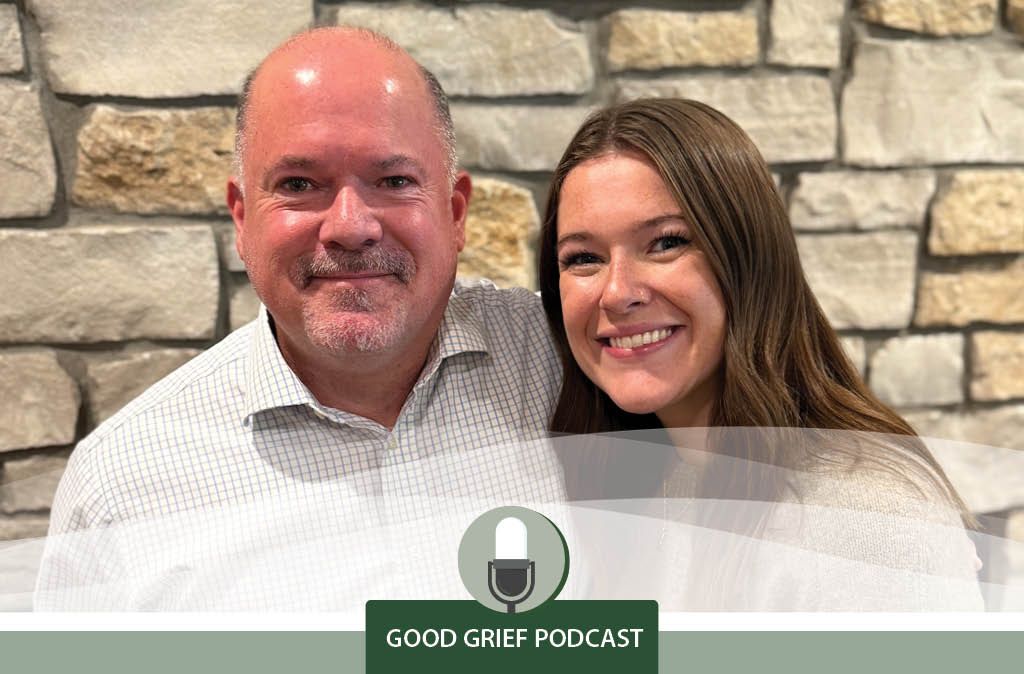
When you walk into O'Connell Family Funeral Home, you're not just entering a business—you're stepping into nearly a century of family legacy, community connection, and genuine compassion.
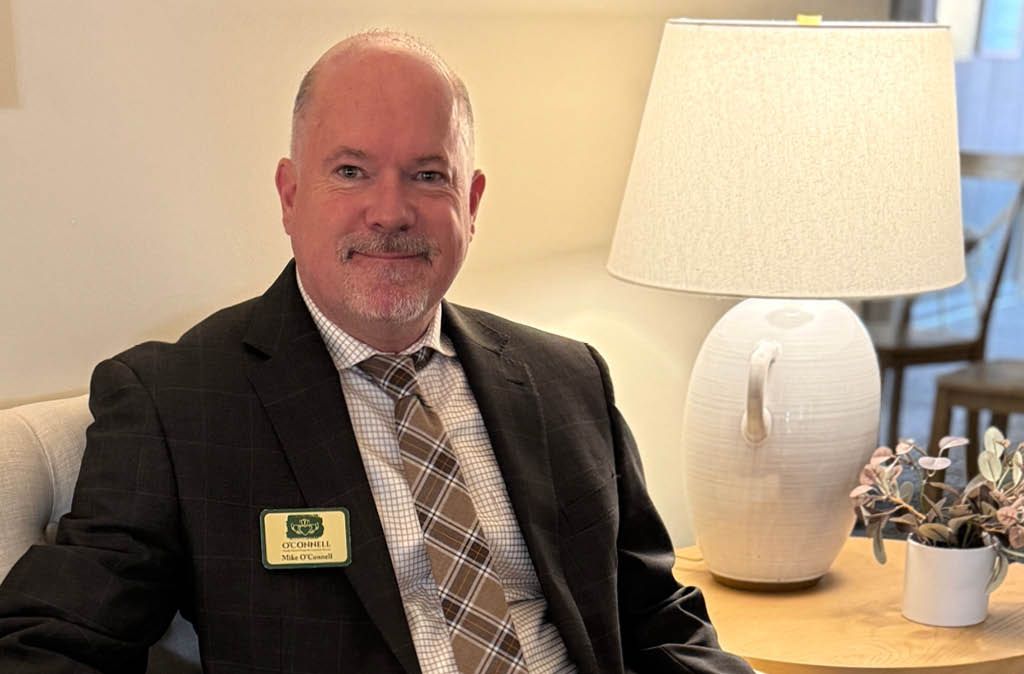
In a recent conversation on the Good Grief podcast, Mike O'Connell and his daughter Emma opened up about what it truly means to serve families through life's most difficult moments, and how their family's calling has shaped who they are today.
A Legacy That Started in 1926
The O'Connell story begins in an era when the Model A hadn't even been introduced yet. Founded in 1926 by Mike's great-uncle Frank O'Connell—one of the very first graduates of the University of Minnesota Mortuary Science Program—the business originally operated as "O'Connell Furniture and Undertaking."
[00:01:46] The Evolution of Funeral Care
Mike explains how dramatically the industry has changed: "In the 19th century, death care was largely domestic. Families and neighbors cared for their own and they prepared the body and they held viewings in the home parlor. That's why when you hear people say, 'would you like to go in the living room?' That's because that's not where you put the dead bodies. That was for the living."
Back then, carpenters and furniture makers—those with wagons and woodworking skills—naturally evolved into providing full funeral services. These tradesmen became our first undertakers, often running family businesses passed down from father to son, living upstairs while conducting funerals downstairs.
Mike shares a fascinating detail about his father's early work: "He would take out the bay window in a house so they could get a casket in if it was too big for doors. He also embalmed people at their homes. That to me is just bizarre. Growing up, I never saw a hammer or screwdriver in his hands, so for me to see him doing that just blows my mind."
Standing at a Crossroads
[00:04:15] The Industry Today
The funeral profession faces significant challenges. During COVID, the industry lost around 25% of its workforce. Today, large corporations are attempting to consolidate what has traditionally been a community-centered profession.
"In some estimates, 35% of funeral owners will close, sell, or get consolidated by large corporations in the next five or seven years," Mike explains. "These conglomerates come in and try to push smaller funeral homes out of town, much like we've experienced in Pierce County."
The difference between corporate and family-owned funeral homes is profound. As Mike puts it: "SCI, which is probably one of the largest chain of corporate funeral homes in the country, is publicly traded on Wall Street. What do you think that means for families? They're gonna get taken advantage of at times. Our boss is the community. We have to see them at church, at the game, at the grocery store, and so we have to make sure that our services equal that."
Emma's Unexpected Journey
[00:06:44] Finding Her Path
Emma O'Connell never planned to work at the funeral home. After high school, she pursued psychology at UW-Stout, then tried interior design. Something wasn't clicking.
"I always just joked that I was never gonna work at the funeral home because I didn't see myself as having all the requirements to be a funeral director," Emma shares. "But little did I know that there are so many working parts of a funeral home, and you don't have to be the person that does the embalming and the late night calls. You can also find something that fits well with you."
[00:09:15] Her Role Today
Emma found her calling as a pre-planning specialist, becoming a licensed insurance agent with the state of Wisconsin. "I get to work with people and families, offering them comfort during the process. It wasn't the easiest road, but it's a very rewarding one."
Mike recalls a pivotal moment: "I remember standing in the office and she was talking to a family—it was a difficult conversation. I looked and thought, 'Where did she get that ability?' My first thought was: Grandpa Tom would love that."
His voice catches with emotion as he continues: "I was very proud and I knew she had a gift that was beyond what I even had, or grandpa had. Truly amazing."
Growing Up in the Funeral Home
[00:12:00] Early Memories
For Emma, the funeral home was simply part of normal life. Her earliest memories include running up and down the wheelchair ramp at the old Baldwin location and—less successfully—practicing her electric scooter skills in the empty chapel.
"If you look really close, there might be an Emma-sized dent in the wall somewhere," she laughs.
Mike adds with a grin: "She wiggled until she fell off the couch and landed on her noggin when she was just a newborn. Carla thought she probably had traumatic brain injury. From that point on, she never rode that scooter again."
[00:16:18] Navigating Childhood
Growing up as a funeral director's daughter came with unique experiences. Emma's close friends understood and respected what her family did, but school brought curious—and sometimes hurtful—questions.
"Kids asked me if the crematory doubles as a baking oven," Emma recalls. "I got all the questions in the world from kids at school, but as far as friends go, nobody ever really made me feel weird about it."
Mike remembers harder moments: "Some boys said 'your dad deals with dead people,' and as a little girl that didn't really know the whole picture—the meaning and the difference we make—that was hard on you. In turn, that was hard on me because I couldn't protect you."
Lessons in Compassion
[00:27:36] The Pearl Harbor Experience
One of Emma's most profound memories came at age 16, when the funeral home retrieved the remains of a Pearl Harbor veteran whose body had been recovered from one of the ships.
"We got to drive the hearse out onto the tarmac. The plane landed and they had a whole ceremony. I got to photograph this," Emma shares. "It was one of the coolest experiences that I know a lot of other people will not be able to experience. To see that man return to his family after how many years—beautiful to see."
Mike knew this would be formative: "I thought, no one will get to see this. This is a huge learning experience to understand that these people gave their lives and how serious it is when the military takes them some 70 years later, like it happened yesterday. I knew that would be forever engraved in her head."
[00:29:28] Shaped by Loss
The O'Connell family's understanding of grief isn't just professional—it's deeply personal. Emma was only two years old when her godfather, Uncle Dan, was killed.
"People forget that we're people too, and we don't just help deal with your passings. We do have our own," Emma reflects. "To have that intertwined with seeing other people's grief while seeing our own, and recently having a passing of my own, I think that has brought me even closer to people."
Mike shares how even as a five-year-old, Emma showed remarkable emotional intelligence: "I'd say, 'Come on Em, let's go downstairs. We're gonna watch Uncle Dan's video.' And you'd say, 'You want to cry?' I'm like, 'I do.' And we watched the video on the couch with the dogs."
Emma adds: "I would give you the phone and say that you had a special call from Heaven. I didn't really understand that Heaven was a completely different place, but I knew it was a good place and I had family there."
[00:32:55] Understanding Empathy
Dan's death transformed Mike's approach to his work: "I always said I thought I was good at what I did before Dan was killed. But when Dan was killed, that's when I really got going on personalized funerals. I did his funeral—we had over 2,000 people, probably 5,000 at the visitation. I did everything I could to honor him, from 100 fire, EMS, and police cars and one helicopter that did a flyover because he was a flight medic."
"After that, I thought: why aren't people doing this? You don't have to be military, police, or a fireman. Everybody's got their story. That just drove me to want to get that story told. I thought I was good at what I did, but I understood what empathy was then. I could say, 'Yeah, I know what that's like. I remember the pain of it.'"
Even 23 years later, the grief remains: "It's been 23 years and sitting here talking about it... Society remembers Christmas, Thanksgiving, birthdays. But for us that grieve, it's every day. It doesn't matter if it's the 25th of December—the 26th still sucks too, and so does the 27th."
Working Together as Family
This is paragraph text. Click it or hit the Manage Text button to change the font, color, size, format, and more. To set up site-wide paragraph and title styles, go to Site Theme.
[00:21:23] The Reality of Family Business
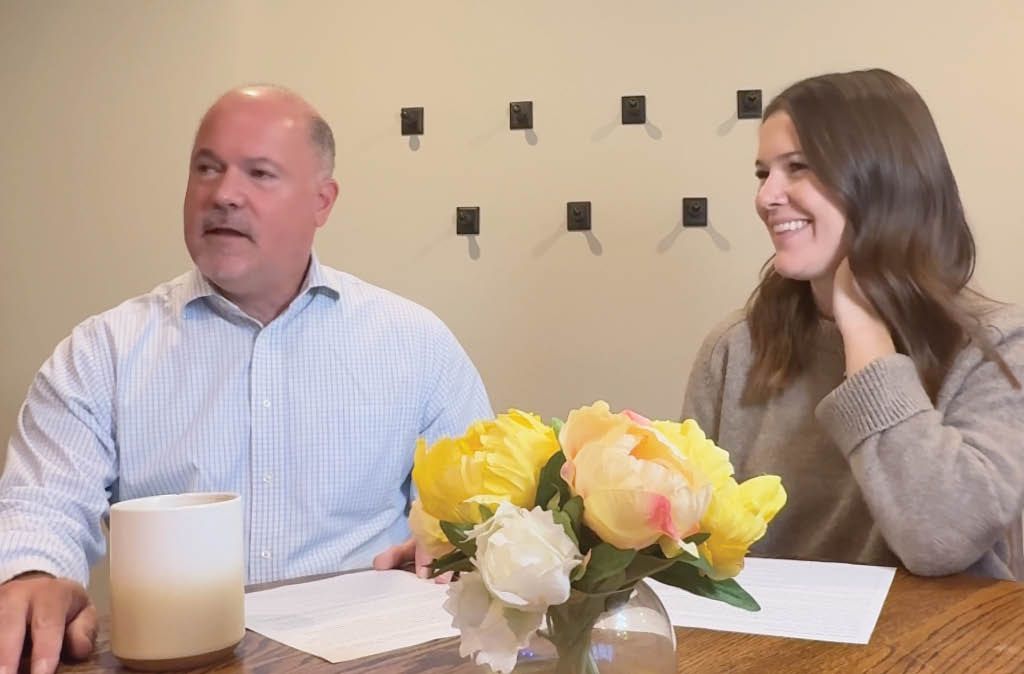
Emma describes working with her parents as "honestly great," but Mike keeps it real: "There's times where you want to scratch my eyeballs out. There's times where you're really frustrated with me and you're mad. It's not always peaches and cream."
He reflects on the unique dynamics: "When you have closeness like that, you're gonna be more vulnerable. But also probably more on the spectrum of when you're gonna be mad. With a coworker you might be more hesitant on really opening up—you can go separate ways. In your instance, you can't."
"I remember when Dan and I and Dad worked together—you could be super upset with them, like teed off. And then: 'Are you coming over for dinner later?' 'Yeah.' And then you'd have to just kinda let it go. That's actually a good thing, but it's also probably not the healthiest because you don't talk about it."
[00:24:14] Learning from Each Generation
Emma has carefully observed both her parents: "I wouldn't know and be who I am without their guidance. I've definitely taken some things away with how they work with people, how they put their all into the business. I also would say that I might have learned from some mistakes as well, so it's a good 50/50 of taking some of their traits and molding them to who I am, and also learning from past mistakes."
One lesson came from watching her grandfather Tom, even in his final years: "When grandpa went into the nursing home here in Hudson, he still was calling up dad, bugging him to bring him to people's funeral services—not even to work, but to be there to show them that he still cared and that he might not be the front face anymore, but he will be there and he will see it through. That really taught me something: to be present."
What It All Means
[00:39:09] Honoring Lives
When asked what her family does, Emma's answer is simple but profound: "The simple answer is we work on people who've passed away and we give a celebration for their family. But deeper for us, what it really is: honoring somebody's life. There's a huge hold on the word 'honor' for me. We're here to celebrate them in the way that they and their family would want them celebrated, whether that's having a helicopter fly over or having ball markers for golf in a little bowl that's personalized to take on your next golf trip. Big or small, that's what we do."
Mike adds: "People tell me, 'Call me anytime.' And they're like, 'I'm not gonna.' I said, 'This isn't a job, it's a calling. It's a way of life.' Emma grew up with that—helped set flowers up, set visitations up with memorabilia—and it just became second nature to her."
[00:35:45] Genuine Compassion
Emma has learned that true compassion goes deeper than professional courtesy: "It's kind of easy to give compassion to the person who gives me a call and says they wanna sit down and talk about their funeral service. But to really, truly learn genuine compassion and wishing you could take the pain away from the people that you love the most has made me think to myself that somebody that I'm having at an appointment has the same family members that care about them. So I put myself in those family shoes and say, 'I wish I could take the pain away from this person that I love.' I carry that into appointments with me so that I can have that same genuine compassion. It's easy to put on that mask, but to genuinely care about somebody—that's different."
Looking to the Future
[00:41:40] Passing It Forward
When asked what values she would pass to her own children someday, Emma doesn't hesitate: "I hope that I get to have a family of my own someday. I would love to pass on to them compassion for others. We never know what people are going through. You never know if somebody just lost somebody. Compassion for others. And if they feel called that they wanna learn more about it, I would be absolutely happy to teach them all about what I do for work. And if they wanna make it the fifth generation, then that would be awesome."
Why This Matters
In an era when large corporations are consolidating funeral homes across the country, the O'Connell story reminds us what we stand to lose. This isn't just about business—it's about community connection, genuine compassion, and the kind of care that can only come from people who will see you at church, at the grocery store, at the game.
It's about a little girl who once sang Hannah Montana songs over the PA system growing into a woman with an extraordinary gift for comforting families in their darkest moments.
It's about a father who transformed his own devastating loss into a mission to honor every person's unique story.
It's about nearly a century of one family showing up—at church dinners, community events, and in moments of profound grief—because that's what neighbors do.
As Mike says, "Our boss is the community." And in small towns with big family hearts, that makes all the difference.
About O'Connell Family Funeral Home
Serving the community since 1926, O'Connell Family Funeral Home offers compassionate funeral services, pre-planning guidance, and personalized celebrations of life.
To learn more about pre-planning or to speak with Emma about creating a plan that honors your wishes and provides peace of mind for your family, visit our website.
Planning ahead is one of the greatest gifts you can give your loved ones.